Every season we get the same question: which is better, Osteen or Keitt?. The short, honest answer is neither. It depends on when you want to eat, how you plan to use the mango, and which flavor profile suits you best. After more than forty years planting, tending, picking and eating these two varieties, here's everything you need to know to choose well.
The two flagship varieties of the Costa Tropical
In Spain — and essentially across continental Europe — commercial mango grows in one place only: the Costa Tropical, Almuñécar, Granada and Málaga. Within that strip, the two varieties covering 95% of production are Osteen and Keitt. One starts as the other winds down, so between them we get four solid months of national season.
They are cousins, not sisters. Both belong to the modern Tommy Atkins group selected in Florida in the mid-20th century and brought to Spain in the 1980s. But they're as different as a Pinot Noir and a Syrah: same family, distinct character.
Quick reference: Osteen and Keitt side by side
| Feature | Osteen | Keitt |
|---|---|---|
| Spanish season | August — November | October — November |
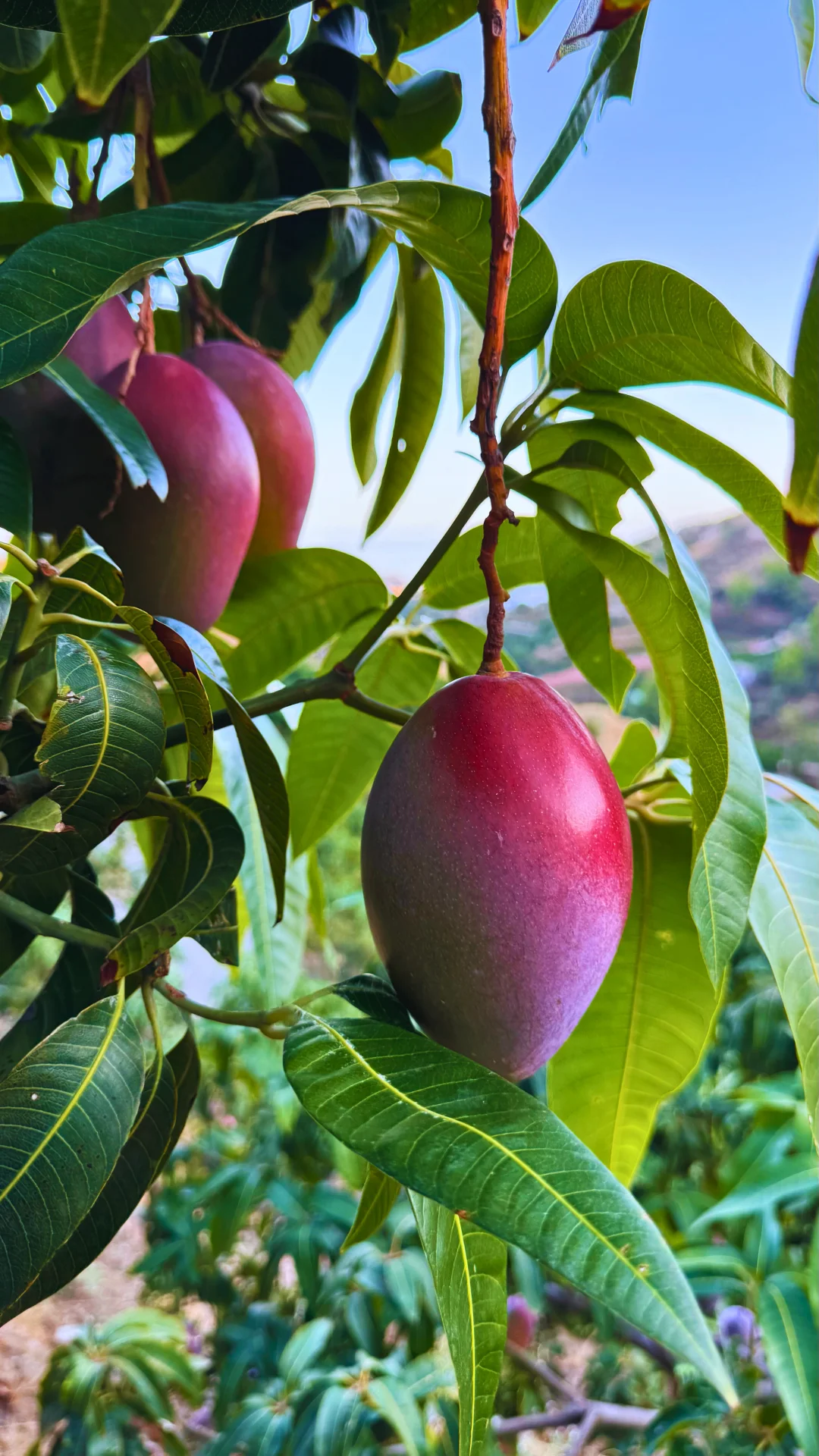
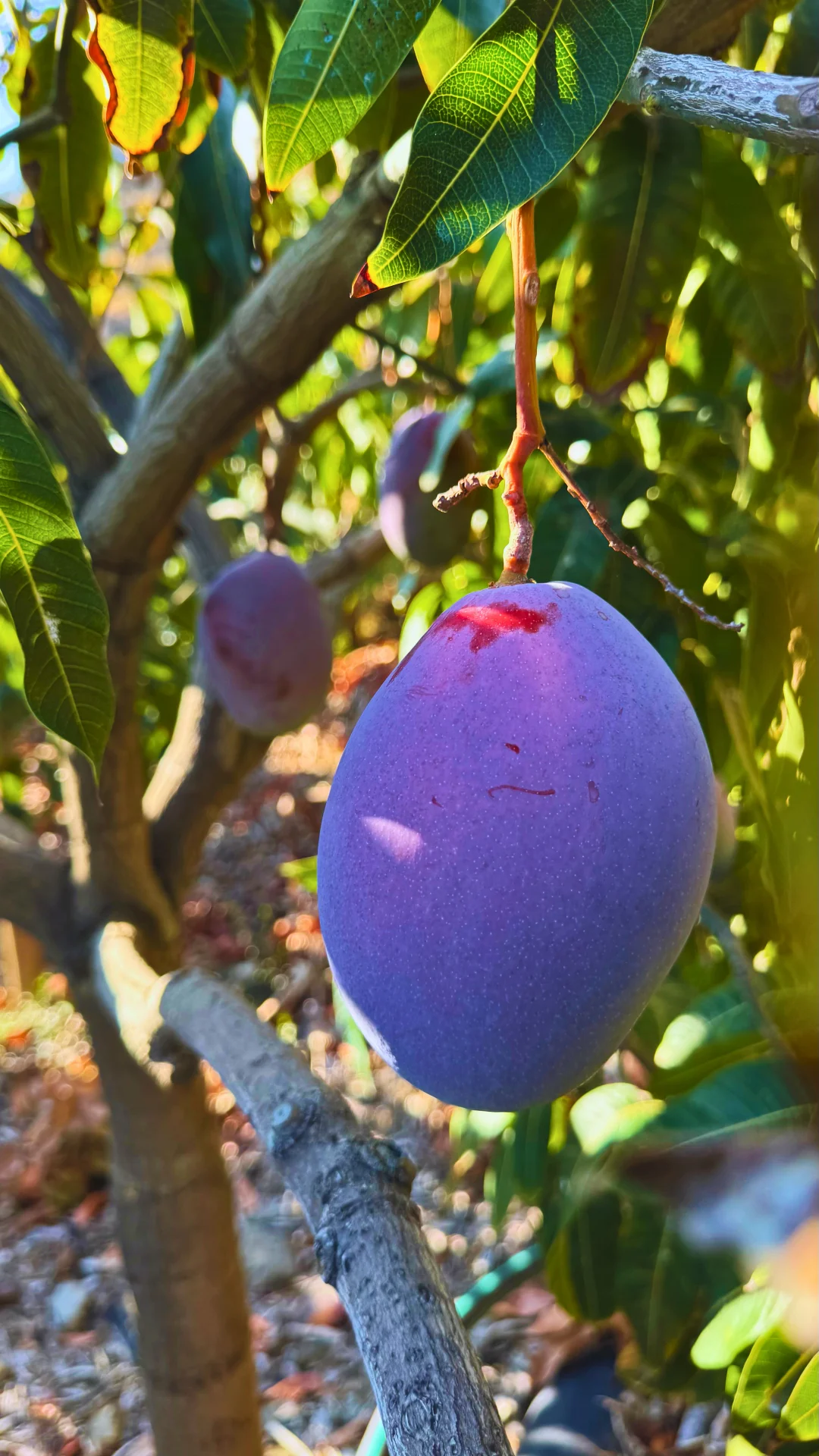
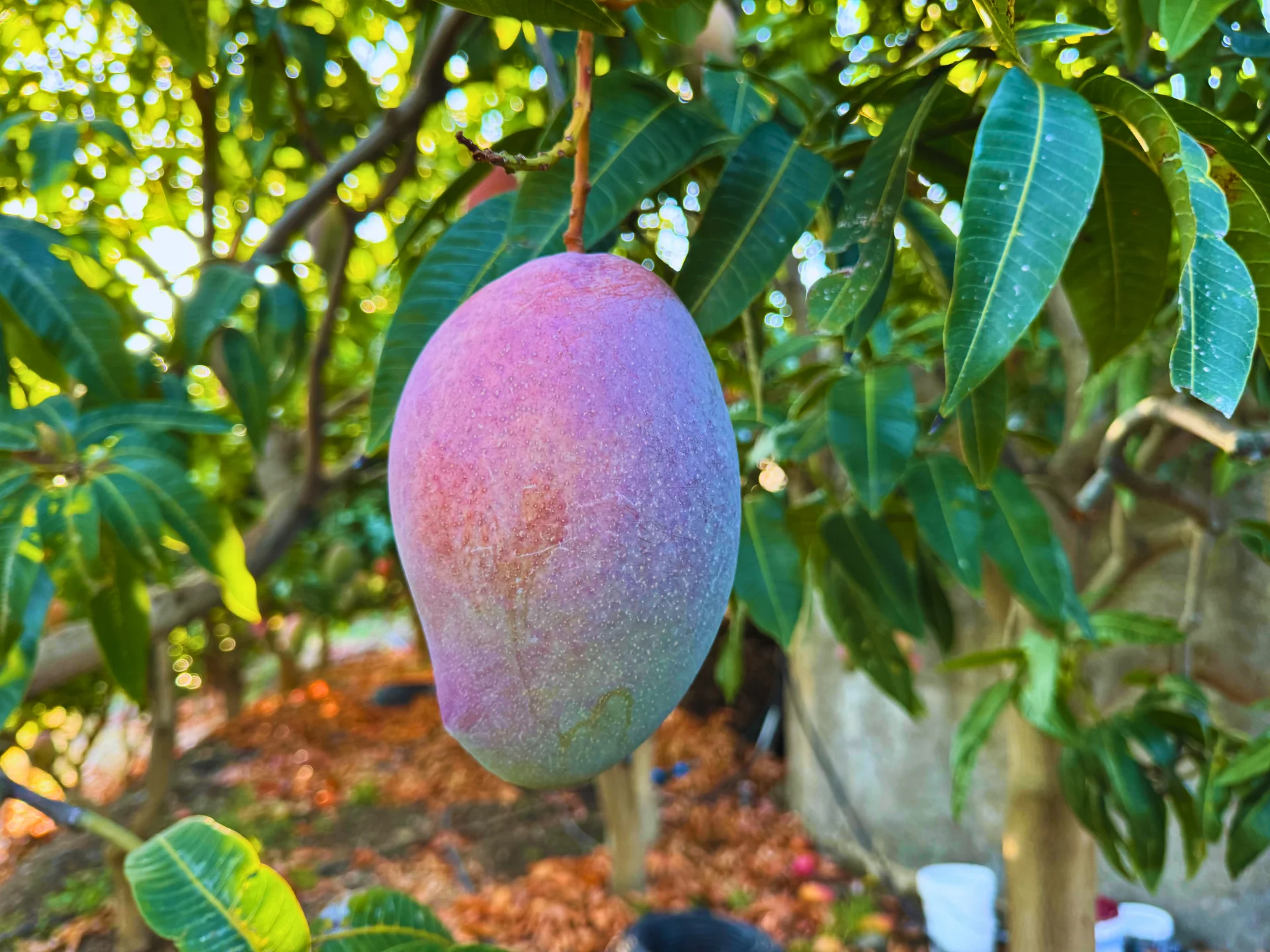
| Ripe skin color | Purple with reddish tones, yellow on sun-side | Green with a light pink blush |
| Average weight | 400 - 600 g (14-21 oz) | 500 - 900 g (17-32 oz) |
| Shape | Oval with a defined tip | Rounder and bigger |
| Fiber | Very low | Practically none |
| Sweetness (Brix) | 14 - 16° | 15 - 18° |
| Acidity | Balanced, with a citrusy edge | Light, almost pure sweetness |
| Texture | Firm, creamy | Very juicy, buttery |
| Aroma | Intense, floral-tropical | Softer, ripe melon |
Osteen mango: the elegant all-rounder
The Osteen is probably the most recognizable mango for the European consumer. For good reason: when it ripens on the tree it develops a beautiful purple-wine skin, the flesh is firm yet creamy, and there's a perfect balance between sweetness and a subtle acidic note that stops it from feeling cloying.
If this is your first taste of real Spanish mango, this is our pick. Here's why:
- Reference flavor. What most people picture when they think "good mango" closely resembles a ripe Osteen. It's the variety everyone else gets measured against.
- User-friendly texture. Doesn't fall apart in your hands, cubes nicely, holds up in salads and tartares without turning into compote.
- Dramatic skin. On a platter, that purple color looks like a still-life painting. Ideal for gifting.
- Decent shelf life. Once ripe, it holds three or four days in the fridge without collapsing.
Where Osteen shines
- Mango halves eaten with a spoon — our favorite September breakfast.
- Warm salads with aged cheese, rocket and walnuts.
- Avocado-mango-cilantro-lime toasts: unbeatable brunch.
- Paired with cured ham or aged prosciutto — the salty-sweet contrast is brilliant.
- Tartares and carpaccios, because cubes stay neat.
Osteen is the mango you put in front of someone who has "never tasted real mango" and you watch them go quiet for a good long while.
Keitt mango: the juicy giant of late season
The Keitt arrives as Osteen departs and closes the season in November. It's bigger — a single piece easily tops 1 kg — its skin stays green even when fully ripe, and its flesh is practically a sponge loaded with juice.
The green skin throws a lot of people off. Every season we get calls from worried customers because "their mango is still green". The test is simple: gently press with your thumb near the stem. If it yields slightly, it's ready. If it smells sweet when you bring it to your nose, certain. Color isn't a reliable cue for this variety.
Where Keitt has no rivals
- Smoothies, shakes and juices. Its juiciness is unbeatable. Half a Keitt with Greek yogurt gives you a shake bordering on dessert.
- Mousses, sorbets, semifreddos. Puréed flesh comes out silky with barely any added liquid.
- Chutneys and sauces. Holds up to short cooking without turning into pulp, which is gold for curries or grilled meats.
- Extending the season. It's what we eat at home in October and November, when Osteen has waved goodbye.
Keitt at the table
A Keitt carpaccio with goat's cheese and walnuts as a starter, or cubed over a warm salad, makes the most of its juicy flesh and clean sweetness like no other variety. It's the mango that looks best on a plate.
So which do I order? Answer by month
As growers, this is what we'd order ourselves depending on the date:
- August: early Osteen. Small quantities, very fresh fruit — for enthusiasts opening the season.
- September: Osteen at peak. The star month. If you order only once a year, this is when.
- October: both overlap. The best time to order a box of each variety and compare them at home.
- November: pure Keitt and the close of the season. Large pieces, very juicy, perfect for cooler weather and warm dishes with mango as a side. It's the last month, so order early if you don't want to miss out.
Myths we need to bust
Myth 1: "a green mango is unripe"
Depends on the variety. A green Osteen isn't ready — true. But a green Keitt with soft flesh is. Don't judge by color alone.
Myth 2: "the bigger the mango the better"
False. Size depends on variety, year and individual tree. A 450 g Osteen may have more flavor than a 900 g Keitt from a young orchard. What matters is time on the tree, not weight.
Myth 3: "all mangoes are full of fiber"
Modern selected mangoes — Osteen, Keitt, Kent — have very little fiber. That unpleasant stringy feel comes from older varieties (Mulgoba, old Haden) or, mostly, from fruit picked green and ripened in a chamber: the starch never fully converts to sugar and you get that cardboard texture.
What really matters: origin and time on the tree
In the end, the difference between Osteen and Keitt is real but small next to the difference between a tree-ripened mango and a supermarket mango picked green and gassed with ethylene in transit.
Both varieties we grow share the essentials: natural sun-ripening, picking on demand, zero artificial ripening chambers, and a direct trip from tree to table in 24-48 hours within mainland Spain. That's what you notice on the first bite, regardless of whether it's Osteen or Keitt.
If you're undecided, order a box of each variety in October, when they overlap. You'll taste both on the same day, at the same temperature, on the same plate. That's the only honest way to find out which one you prefer.
Check which variety is available right now in our online shop, or join the pre-order list if the season hasn't started yet.