Pre-orders open

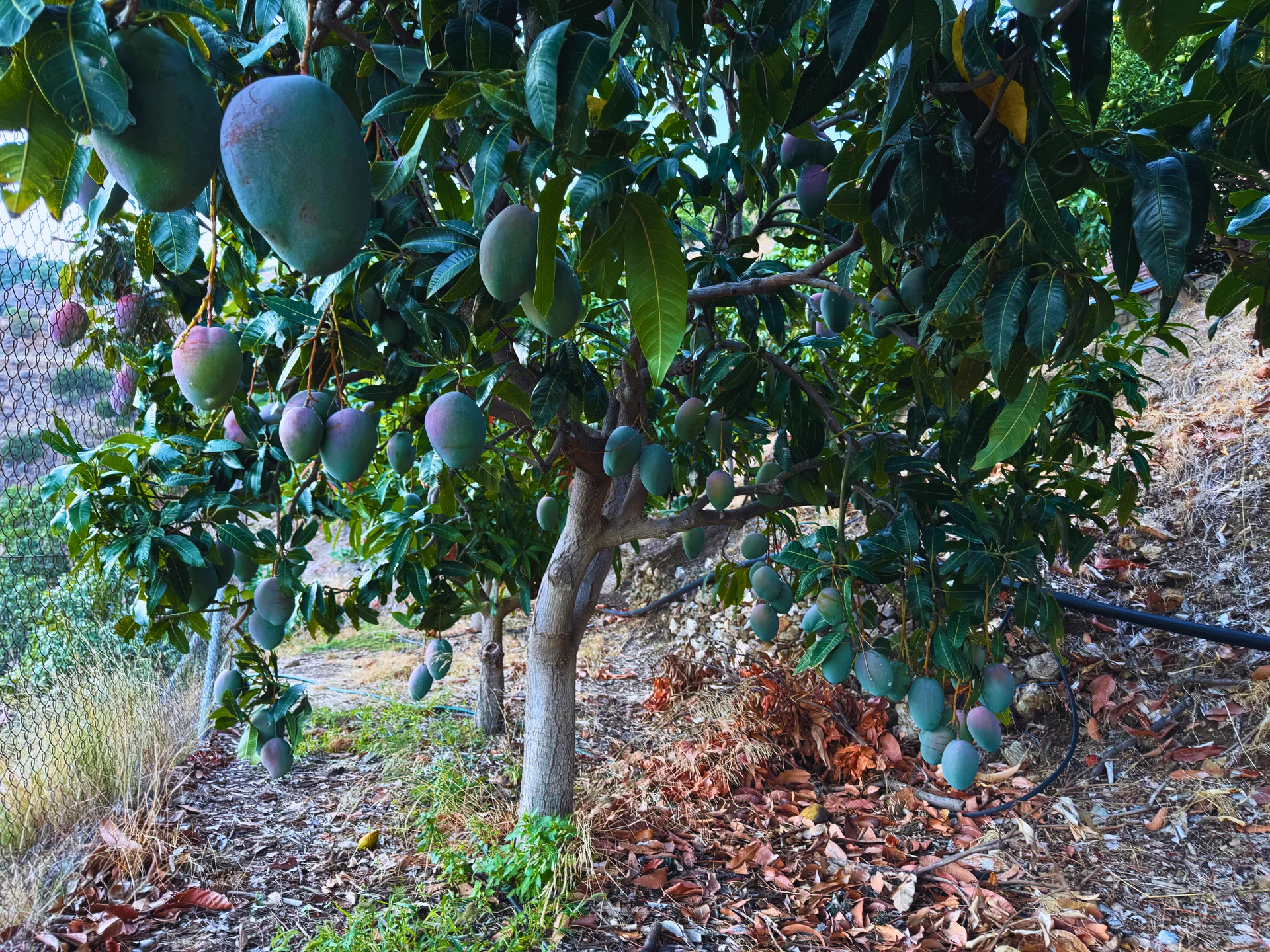
Keitt mango tree loaded with green fruit on the Costa Tropical

Buy Keitt mango online: the juicy late-season mango

The variety

What makes the Keitt mango special among varieties?

Late flowering and ripening

Flowers in April-May (a month later than Osteen) and reaches ripeness between October and November. It's the natural closing of the Spanish mango season.

A variety with history since 1939

Originated as spontaneous mutation in Florida. Reached Spain in the 1980s and found ideal conditions for its long cycle on the Costa Tropical of Almuñécar, Granada.

400-800g per piece

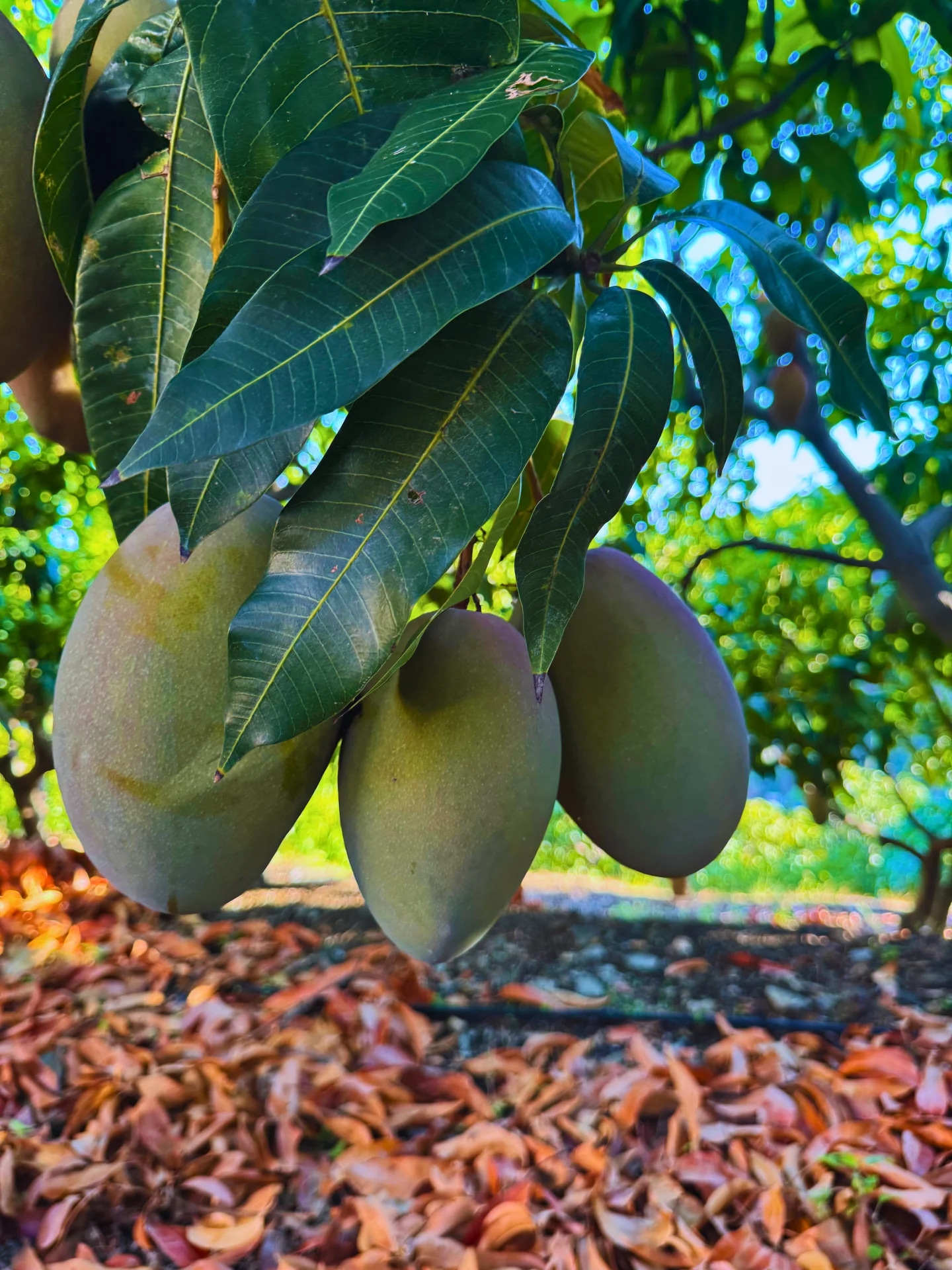
Bigger pieces than Osteen, with green skin even when fully ripe. Deep yellow extremely juicy flesh, ideal for juices and smoothies.

Flavour and texture

What does a tree-ripened Keitt mango really taste like?

Green Keitt mangoes hanging from the tree at El Lucero farm

The Keitt differs from the Osteen in two key parameters: far greater juiciness and a balancing acid touch that makes it less cloying. This makes it the preferred variety for those looking for a fresher mango or using it in smoothies, cocktails and preparations that require natural liquidity.

Our Keitt is harvested when the flesh reaches its maximum natural sugar load even though the skin remains green (don't trust visual colour: the Keitt never yellows). Each bite is juicy, sweet but with a citrus touch, aromatic and clean on the palate. Ideal for spooning, juicing, or incorporating into professional cooking.

Taste the difference
Keitt tasting card

Flavour

Sweet with a balancing acid touch. Clean and refreshing.

Texture

Very juicy, soft, slightly fibrous near the stone.

Colour

Green skin (never yellows). Deep yellow flesh.

Aroma

Fresh, citrus-tropical, less enveloping than Osteen but cleaner.

Ideal for

Juices, smoothies, cold sauces, fusion cooking.

Our commitment

What ensures the Keitt mango arrives at its real peak?

Harvested to order

Your Keitt is picked from the tree when you place the order. We don't accumulate stock in chambers waiting for customers.

Natural ripening on the branch

No ethylene or cold chambers. The Keitt completes its 7-9 month cycle on the tree, something impossible to replicate artificially.

Direct from the grower

Growing family since 1980. Over forty years growing Keitt on the farm.

Costa Tropical, Almuñécar, Granada

Unique subtropical microclimate that allows Keitt to ripen in October-November when elsewhere it has already ended.

Season closed in November

Oct-Nov only. When the crop runs out, we close until the next campaign. No greenhouses, no imports.

Transparent pricing, shipping included

Same price as Osteen despite larger pieces. Mainland Spain shipping included in the final price.

Keitt Mango boxes

Which Keitt box should you choose?

Trial

Keitt Box 2 kg

3-5

€17.95

9.98 €/kg

Perfect for trying the late-season variety for the first time or for one to two people.

Buy
Best seller

Keitt Box 4 kg

6-10

€27.95

7.24 €/kg

The favourite of families and those making daily smoothies in autumn.

Buy
Shipping included to mainland SpainOrder via WhatsApp
Practical guide

How to tell if a Keitt mango is ripe if it doesn't change colour?

Keitt ripeness signals

  1. 1Gentle finger pressure: the skin should yield slightly
  2. 2Sweet aroma from the ends (not from the main skin surface)
  3. 3If still too hard to the touch, leave 2-3 days at room temperature

Colour NEVER indicates ripeness in Keitt. It's the only variety that stays green even when perfectly ripe. Trust touch and aroma, not sight.

Storage

Fridge once ripe: keeps 5-7 days (longer than Osteen thanks to thicker skin)

Diced pulp or juice cubes: up to 6 months in freezer

For juice: squeeze the ripe flesh through a fine sieve. Liquid yield is 40% higher than Osteen.

Ways to enjoy it

  • Pure natural juice or mixed with lime and ginger
  • Smoothie with spinach, banana and almond milk
  • Cold sauce for white fish carpaccios
  • Chutney for cheese boards and Iberian charcuterie
  • Tropical cocktail with aged rum and basil leaves
See full recipes
Health

What does a Keitt mango offer nutritionally?

Values per 100g of flesh

Energy55 kcal
Carbohydrates14 g
Natural sugars12.5 g
Protein0.8 g
Vitamin C41 mg51%
Vitamin A48 µg6%
Vitamin B60.13 mg10%
Potassium175 mg8%

High natural hydration

Because of its high juiciness, it provides more water than other varieties: ideal in autumn to offset drying central heating.

Boosted vitamin C

41 mg per 100 g (51% of RDA). Helps maintain the immune system in autumn.

Fewer calories per weight

55 kcal vs 60 kcal in Osteen due to higher water content. Relevant for moderate calorie-controlled diets.

Specific antioxidants

Mangiferin plus vitamin E in the natural skin oil. Work synergistically against cellular oxidative stress.

Choose your variety

Keitt or Osteen mango, which one suits my use?

Osteen
Keitt
Season
Aug — Oct
Oct — Nov
Flavour
Balanced sweet
Sweet with acid hint
Texture
Creamy, firm, fibre-free
Very juicy, soft
Skin
Purple-red
Green even when ripe
Average weight
300-600 g
400-800 g
Ideal for
Raw, puddings, salads
Juicing, smoothies, cold cooking
Frequently asked questions

What should you know about Keitt mango before buying?

The Keitt's green skin even when fully ripe is a genetic characteristic of this specific variety and not a sign of immaturity. Unlike most mango varieties (including Osteen), the Keitt retains the chlorophyll in its skin throughout the ripening process, even when the inner flesh has reached its optimal sweetness and juiciness.

This peculiarity arises from this variety's enzymatic configuration: the enzymes responsible for degrading chlorophyll in other varieties are less active in Keitt, so the green pigment remains. It's similar to how some Granny Smith apple varieties stay green at eating point when others are already yellow or red.

The correct practice to identify a ripe Keitt is to ignore skin colour completely and focus on three alternative signals: gentle tactile pressure (skin yields slightly like a ripe avocado), sweet aroma concentrated at the ends of the fruit, and slight surface wrinkling at the stem. If you follow these three signals you'll never fail with Keitt even if it looks green.

The Keitt has a longer biological cycle than other mango varieties: approximately 7-9 months from flowering to commercial ripeness, compared with 5-6 months for Osteen or Tommy Atkins. This responds to a specific genetic programming of the variety that the original Florida growers selected in 1939 precisely because of its late-season characteristic.

On the Costa Tropical, Almuñécar, Granada, where we grow both varieties, Keitt flowers approximately one month later than Osteen (April-May versus March-April) and needs to stay on the tree through all summer and early autumn before reaching its optimum. Commercial ripening occurs between mid-October and mid-November, extending the Spanish mango season into late autumn.

This characteristic makes Keitt the natural closing of the season. When other European producers have finished with Osteen or earlier varieties, we still have fresh mango on the tree for several additional weeks. It's an important commercial asset for customers and restaurants wanting to keep Spanish mango on their menu through late autumn without having to resort to Southern Hemisphere imports.

The Keitt is objectively superior to Osteen for juicing and smoothies for three measurable reasons: higher free water content in the flesh (approximately 85-87% versus 83% in Osteen), fewer perceptible fibres that clog juicers and centrifuges, and a sweeter-acid balance that is more refreshing in liquid form.

In practical terms, a Keitt with 500 grams of flesh produces approximately 350-400 ml of pure juice without added water, while an Osteen of the same weight generates 250-280 ml. The liquid yield difference is 30-40% in favour of Keitt, making it much more efficient for regular juice production at home or in a restaurant.

In addition, Keitt's natural acid touch (subtle malic acidity) balances sweetness on the palate when drunk, avoiding the cloying sensation that juice made from overly sweet mango can give. Cold gastronomy professionals, bartenders and juice bar owners specifically choose it for this reason during autumn months.

Keitt flesh is intense golden-yellow, considerably more intense than the orange of Osteen. The texture is smooth and very juicy, almost watery in the outer part near the skin and somewhat more fibrous near the central stone, where fibres are more perceptible on the palate than in other varieties.

Net flesh yield per piece is around 65-70% of total weight. A standard Keitt piece of 500 grams provides approximately 325-350 grams of edible flesh, compared to the 70-75% yield of Osteen (which has a smaller stone). This difference is offset by Keitt's larger average weight: one large piece yields almost the same net volume as two medium Osteens.

The Keitt stone is long and flat, occupying more longitudinal space within the fruit. This makes the classic checkerboard cut slightly less effective than in Osteen; many chefs prefer to dice Keitt on a board removing all the flesh with a knife before processing, especially when going to juice or smoothie where cut aesthetics don't matter.

The Keitt is specifically the mango variety that performs best in professional cooking among all available options. Its higher water content, its sweet-acid balance and its slightly fibrous structure make it ideal for culinary applications where Osteen becomes cloying or loses definition under heat.

In cold cooking it works excellently in tartares of white fish (sea bass, gilt-head bream, meagre) adding juiciness without dominating the main product's flavour. It also stands out in ceviches when the mango's acid touch complements lime, in tropical gazpachos for extended summer, and in cold sauces to accompany raw meat carpaccios such as beef or venison.

In hot cooking it holds better than Osteen because the higher water load prevents excessive caramelisation. It works in chutneys to accompany cheeses and Iberian charcuterie, in sweet-sour sauces for chicken or pork curries, in seasonal risottos based on oily fish, and in white wine or cava reductions to finish poultry dishes. Avoid prolonged high-heat cooking: it loses volatile aroma quickly.

No, size or shape of Keitt has no direct relationship with the interior quality of the fruit. Keitt mangoes can vary significantly in weight (from 400 g in small pieces to 800 g in large pieces from the same tree) depending on position on the branch, amount of light received during growth and vegetative vigour of the tree in that particular season.

Small irregular pieces often come from branches with high fruit load where each individual piece has had to compete for resources. They may even have higher concentration of sugars and aromas than large pieces because the plant has prioritised internal quality over external vegetative growth. In blind tasting, professional tasters frequently score irregular pieces equally or even better.

Our quality control discards only pieces with real functional defects: marks, blows, incipient fermentation, uneven interior ripening or surface pests. Aesthetic irregularity by size or shape is not grounds for discard and may appear in your box. If you receive a box with visually irregular pieces but all in good condition, it simply reflects the natural variability of a non-industrial crop that doesn't select on aesthetics.

The Keitt is in fact the most versatile mango variety for professional and home savoury preparations. Its natural acid touch and lower concentrated sugar load make it less cloying than Osteen when combined with protein ingredients (fish, meat) or with intense umami flavours (soy, miso, Worcestershire sauce).

Standout savoury preparations: Keitt chutney with ginger and Dijon mustard to accompany country pâtés and blue cheeses; Keitt tartare with avocado, spring onion and coriander to accompany smoked fish; mixed meagre ceviche with diced Keitt, pink garlic and lime; Thai yellow curry with Keitt and prawns adding juiciness without cloying; spicy chutney with habanero chilli for tacos and quesadillas.

In international cooking it works very well in preparations that originally use imported Alphonso or Haden mango. You can substitute without problems in recipes from Thailand, India, Mexico or the Caribbean: the Almuñécar, Granada Keitt's sensory profile is closer to those tropical mangoes than Osteen, which is sweeter and more European in style. Professional chefs have progressively incorporated it into fusion menus over the past five years.

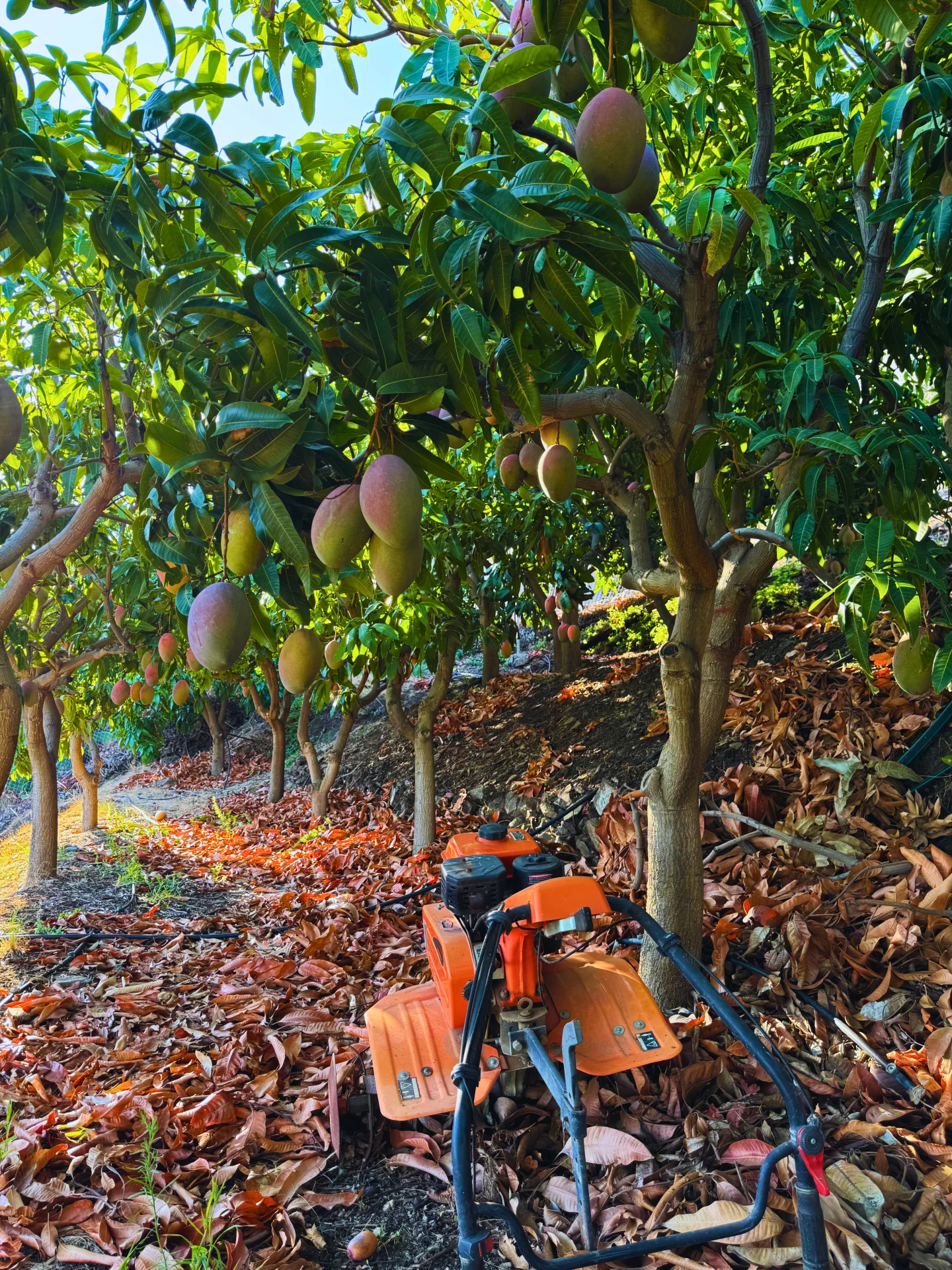
Mango trees with an abundance of fruit during harvest season
Limited season: October — November

Try the real Almuñécar, Granada Keitt mango

When the crop runs out in November, you'll wait until next October. Boxes from 19,95 € with shipping included and direct WhatsApp order.

Harvested to orderDirect from the grower since 1980Direct WhatsApp support
Pay by Bizum or bank transfer, via WhatsAppDirect human attention with the farmFamily grower since 1980 on the Costa Tropical
Newsletter

Subscribe and be the first to know

We notify you when the tree-ripened mango season begins. No spam, just a few times a year.

By subscribing you accept our Privacy Policy. You can unsubscribe at any time.

We use cookies

We use our own and third-party cookies to improve your experience, analyze traffic and personalize content.