You get your box of mangoes. Some are at their peak; others still firm. This is not a defect: it's how it should be. A well-grown mango ships with varying degrees of ripeness so you don't have to eat 6 kg in two days. Here's how to manage ripening at home, with tricks we've been using in our own kitchen for over forty years.
First: how do I tell a mango is ripe?
Three reliable signs, in this order:
- Touch. Press gently with your thumb near the stem (never in the centre — that's where it softens fastest). It should yield slightly, like an almost-ready avocado. Rock hard? Not yet. Squishy? Past it.
- Smell. Bring it to your nose at the stem end. A ripe mango smells sweet, fruity, almost like jam. If it smells of nothing, not yet. If it smells strong and slightly fermented, it's going over.
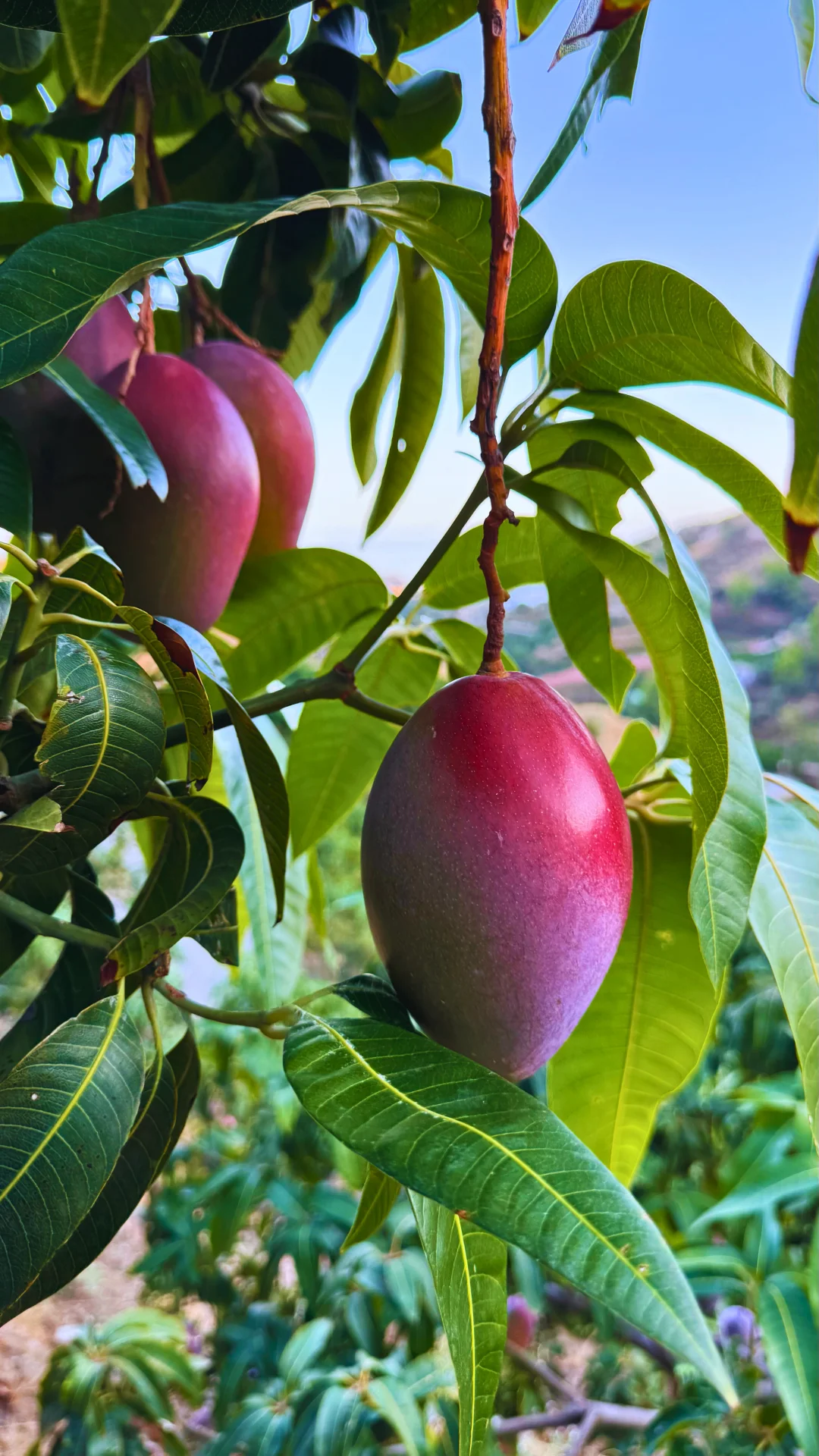
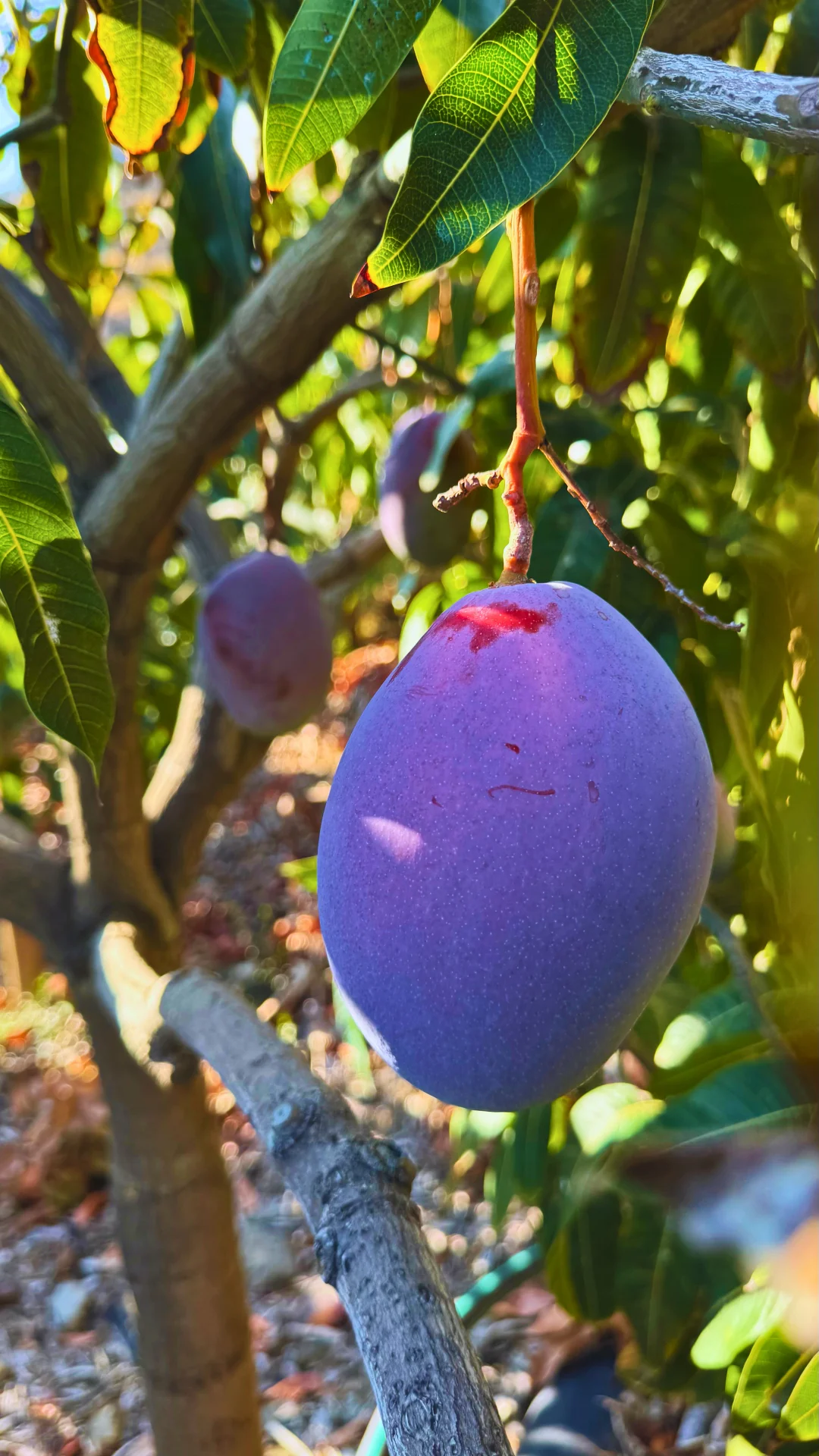
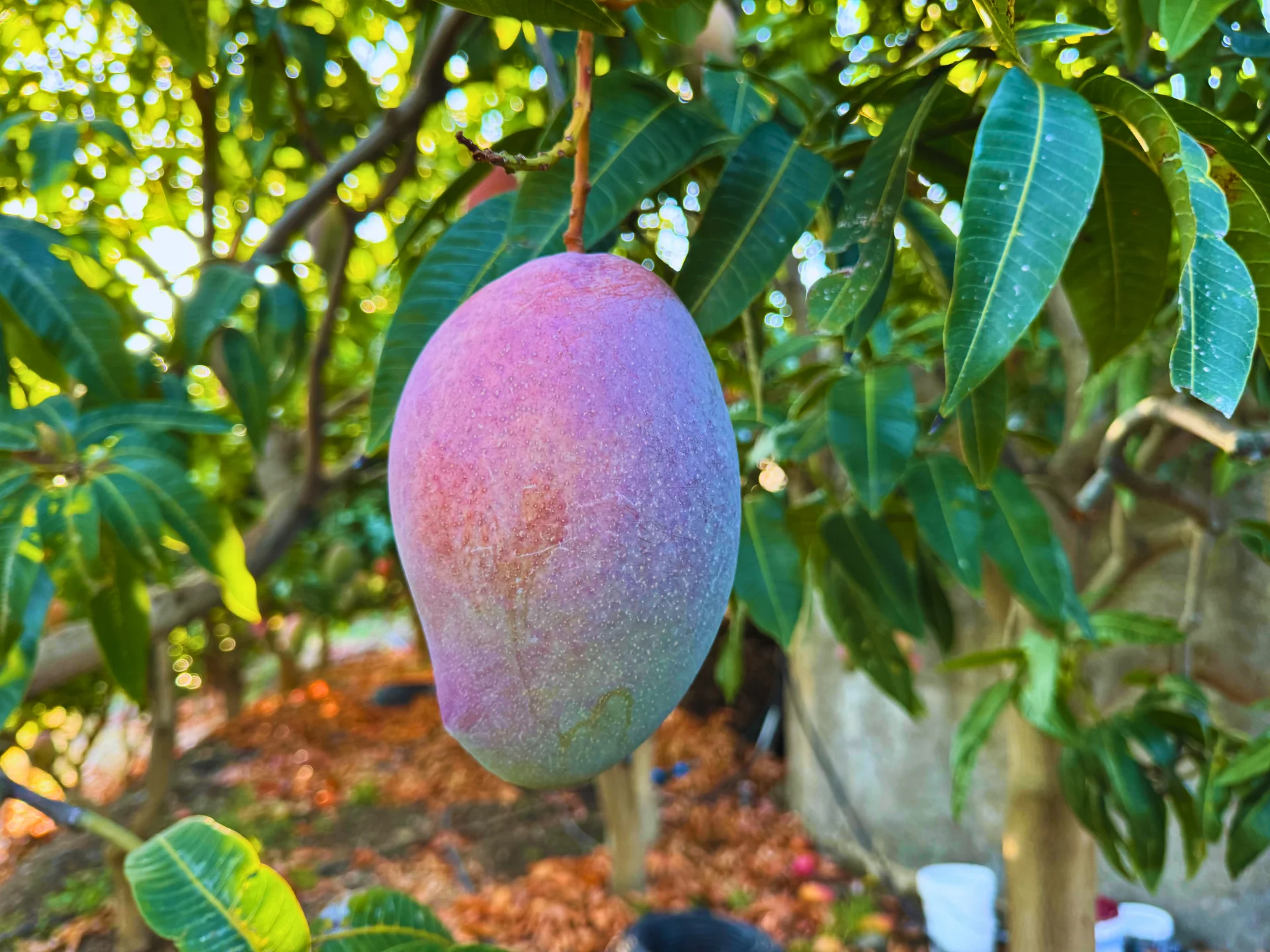
- Colour. The most confusing sign and only useful if you know the variety. Osteen turns intense purple-reddish when ready. Keitt, however, stays green even when perfectly ripe — colour won't help here. Trust touch and smell.
Grower's rule: if it smells of something and yields slightly, it's ready. Never mind if the skin isn't the “perfect” colour from the ad.
Quick science: mango is a climacteric fruit
Mango belongs to a group called climacteric fruits. That means it keeps ripening after picking. During that process, the fruit produces a gas — ethylene — that accelerates its own ripening. The methods below leverage that chemistry.
Method 1: paper bag (the classic and the favorite)
The star method, and not by accident. Shutting the mango in a paper bag traps the ethylene it emits and multiplies the effect, while the bag itself absorbs excess moisture that could cause mold.
How to do it
- Put the mango in a paper bag — kraft, bread bag, whatever you have
- Close the bag by folding the top. Don't seal airtight: it needs some breathing
- Leave it on the kitchen counter at room temperature (20-23 °C / 68-73 °F), not in the fridge
- Check every 24 hours by pressing gently
Estimated time: 1-3 days depending on how green the mango was. Don't use plastic bag — it traps moisture and the fruit can rot before ripening.
Method 2: mango + banana (the natural turbo)
Banana — and apple too — emits ethylene in much higher amounts than mango. Pop it in the paper bag with the mango and the process accelerates notably.
Estimated time: 1-2 days. Careful not to overdo it: check at 24 hours because it can go faster than you expect. Perfect method when you want mango ready for the weekend and it's only Monday.
Method 3: individual newspaper wrap (the staggered)
If you have several mangoes and want to stagger their ripening — one today, another in two days, another in four —, wrap each piece separately in newspaper or kraft paper. Paper creates a microenvironment that speeds things slightly without aggressive ripening.
This is the method we use at home when we get fruit straight from the farm.
Method 4: room temperature and patience
Sometimes nothing needs doing. Leave the mango at room temperature (never in the fridge when unripe) in a fruit bowl, away from direct sunlight that could overdo it, and in 2-5 days it'll be ready. Home ripening is imperfect but natural.
Trick: on top of the fridge
Many people don't know this, but the top of the fridge runs 2-3 °C warmer than the rest of the kitchen thanks to the motor heat. A perfect spot to accelerate ripening without rigging up bags.
Method 5: the rice trick (not recommended for our mangoes)
You'll see the idea online of burying the mango in raw rice to ripen it. It works because rice doesn't breathe and concentrates even more ethylene around the mango — essentially an extreme version of the bag method.
The problem is it accelerates too much. Our mangoes arrive fairly ripe already; stick them in rice and they're likely to go past before you notice. For very green supermarket mango it may make sense, but for ours it's overkill.
The method you should NOT use: microwave
There's an online trick about “microwaving the mango to soften it”. Don't. What you get is softened flesh from heat, not ripened fruit. Those are different things.
Ripening means converting starch to sugar and developing aromas. That needs enzymes working at room temperature over days, not microwaves. In the microwave you lightly cook the fruit — result: a hot, soft, watery, tasteless mango. You've lost your mango.
Common mistakes we see every season
Mistake 1: fridging the mango before it's ripe
Cold stops ripening. If you put a green mango in the fridge, it comes out just as green. Leave it cold long enough and when you try to ripen it later it won't respond the same. Rule: fridge is for already ripe mangoes, not for ripening them.
Mistake 2: pressing with your index finger
Thin fingers leave dents on ripe mango. Use the thumb or palm, which spreads pressure.
Mistake 3: storing stacked in a closed box
If the top mango is softer, it'll press the one below and leave a mark. If you have several, keep them in a single layer or individually wrapped.
Mistake 4: direct sun exposure
Seems intuitive to put the mango in the sun. Don't at home: window-sill sun heats too much and can over-ripen in one afternoon. On the tree, sun is part of a complex balance; on your window, it's just direct heat.
Once ripe, what if I'm not eating it yet?
Now the fridge comes in. A ripe mango keeps 5-7 days in the least cold part of the fridge (veg drawer, never in the direct cold at the back). Take it out an hour before eating to let aromas return.
Peeled and chopped in a sealed tupperware it keeps 3-4 days. And frozen in chunks up to 6 months — perfect for later smoothies or sorbets.
Extra grower tricks
- Sort on arrival: when you get your box, immediately separate the mangoes by ripeness. Hardest for eight days out, medium for five, softest for two.
- Always smell before cutting: if a mango doesn't smell at the stem end, it likely needs another day. Don't cut yet.
- Over-ripe mangoes are gold for smoothies: if one got away, peel, chop and freeze. Stunning smoothie later.
- Avoid metal fruit bowls: some fruits slightly accelerate ripening in contact with metal through minor reactions. Not critical, but ceramic or wood bowls are better.
Already got your box and want to understand the full process? Here's our complete shipping and ripening guide.
Sources and references
Technical data verified against the following scientific and agronomic sources:
- CSIC La Mayora — Spanish Subtropical Horticulture Institute — Spanish research on subtropical mango cultivation
- FAO — UN Food and Agriculture Organization — International mango production and post-harvest
- BEDCA — Spanish Food Composition Database — Mango nutritional composition
- UC Davis Postharvest Centre — Mango — Post-harvest handling (world reference)
- PubMed/NCBI — Mango ripening — Research on ripening and ethylene