Frequently Asked Questions About Mango
Mango Nutrition, Calories & Nutritional Value
No, mango does not make you fat. With approximately 60 calories per 100 grams of flesh, it is a light fruit, comparable to an apple and with fewer calories than banana or grapes. A medium mango of 200-250 g provides around 120-150 kcal, similar to a large apple. Additionally, its high water content (83%) helps you feel fuller for longer, which can help control appetite.
Mango is one of the most nutritionally complete fruits, with over 20 vitamins and minerals. In just 200 g of flesh, you get more than 100% of your daily vitamin C, 12% of vitamin A, 22% of folate and nearly 10% of your recommended potassium. Our Osteen mango has especially high concentrations of beta-carotene thanks to its natural ripening on the tree.
The recommended amount is 1 medium mango per day (200-250 g of flesh). Eating mango 3-4 times per week is ideal to enjoy all its benefits without overdoing it. With our 4 kg box (8-12 mangoes), a family of 4 has fresh mango for the whole week.
Mango Benefits & Properties for Your Health
Mango provides at least 10 proven benefits: strengthens the immune system, improves digestion, protects eye health, nourishes skin and delays ageing, reduces bad cholesterol, regulates blood pressure, fights inflammation, improves memory, prevents anaemia and keeps the body hydrated (83% water). A tree-ripened mango like ours preserves these nutrients intact.
Yes, mango is an excellent ally for skin and hair thanks to its antioxidant combination. Vitamin C stimulates collagen, vitamin A promotes cell regeneration and vitamin E acts as a shield against free radicals. You can apply the flesh directly as a natural face mask for 10-15 minutes.
Mango can be an ally for weight loss. It is low in calories (60 kcal/100 g) and rich in water (83%), which creates a feeling of fullness. Its glycaemic index is medium (51-56), lower than white bread (75). A tip: choose a less ripe mango, as it has less free sugar.
Mango & Health: Diabetes, Sugar and Contraindications
Yes, people with diabetes can eat mango in moderation. The American Diabetes Association classifies it with a medium glycaemic index (51-56) and low glycaemic load (8.4). It is recommended to limit portions to 80-100 g, eat it as dessert and choose less ripe mango. Always consult your doctor.
Mango contains natural sugars (fructose), about 14-15 g per 100 g of flesh, within the normal range for fruits and below grapes (16 g). Its glycaemic index is medium (51-56) and its glycaemic load is low (8.4), so it does not cause sharp glucose spikes when eaten in normal portions.
Mango is safe for the vast majority of people. Precautions: people with latex allergy (possible cross-reaction with the skin), uncontrolled diabetes (moderate the amount), gastrointestinal issues (natural acidity), kidney insufficiency (potassium), and excessive consumption (more than 2-3 per day may cause digestive discomfort).
How to Peel, Cut and Eat Mango
There are 3 main techniques: The hedgehog method (recommended): cut two cheeks on each side of the stone, score a grid pattern without cutting through the skin and invert. The slice method: peel and cut thin slices, ideal for salads. The spoon method: cut in half, remove the stone and eat directly. The Osteen has a smaller stone which makes cutting easier.
It depends on ripeness. Firm: a vegetable peeler works perfectly. Very ripe and soft: cut in half and use a spoon. Glass trick: cut in half and slide each half along the rim of a glass to separate the flesh. Our mangoes arrive in progressive ripening stages: use a peeler for the first few days, a spoon for the last.
Yes, the skin is edible and contains antioxidants, but it is not the most pleasant experience: waxy texture and bitter taste. People allergic to latex should avoid it (it contains urushiol). We recommend eating only the flesh, where all the flavour and nutritional richness lies.
Buy Mango Online: Shipping, Freshness & Trust
Yes, buying mango online is completely safe when you buy directly from the farmer. We harvest to order and ship within 24-48h to mainland Spain. Your mango does not pass through warehouses: it goes from the tree straight to your door. Over 40 years of experience growing mango on the Costa Tropical, Almuñécar, Granada.
Yes, it is completely normal and it is a good sign. Arriving green and firm means it was harvested less than 48 hours ago. Mango continues to ripen off the tree. Leave it at room temperature for 2-5 days. The Osteen will change colour (green to purple-red). The Keitt stays green: use touch and aroma as your guide.
Osteen vs Keitt Mango: Which One to Choose?
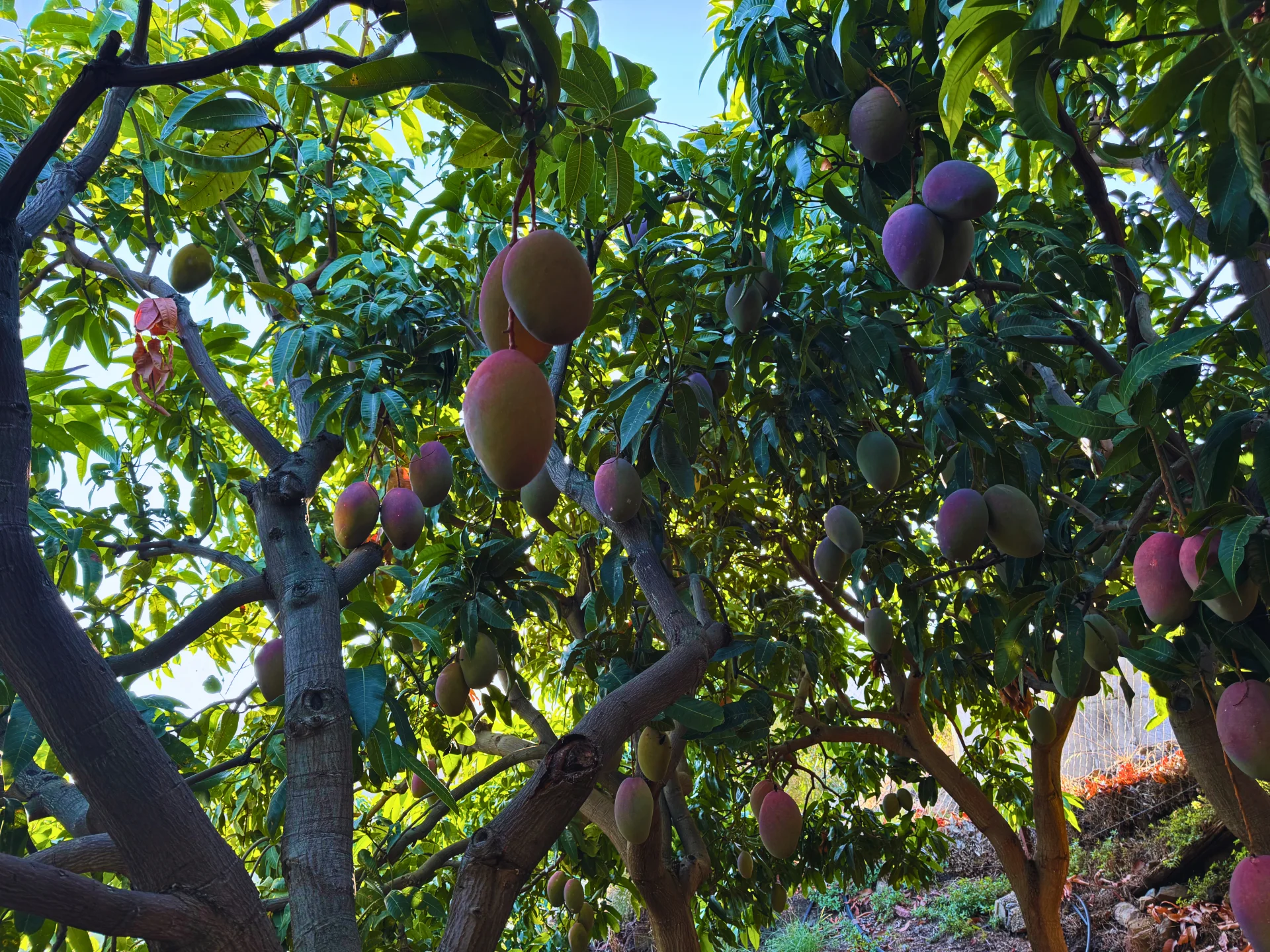
Osteen (Aug-Oct) has a sweet and balanced flavour, firm and creamy texture, turns purple-red when ripe and weighs 300-600 g. Keitt (Oct-Nov) is juicier with a refreshing acidic touch, stays green even when ripe and weighs 400-800 g. If you have never tried them, start with Osteen. If you are looking for something different and juicier, the Keitt will surprise you.
Our mango comes from the Costa Tropical, Almuñécar, Granada (< 500 km), ripens naturally on the tree, is hand-picked to order and arrives in 24-48h with no middlemen. Supermarket mango travels 8,000-10,000 km, ripens in a cold storage room, takes 15-30 days and passes through 3-5 intermediaries. You are not buying fruit; you are buying directly from the family that has been growing it since 1980.
Spanish Mango Season: When to Buy It
The season runs from August to November. Osteen: August to October, the main variety. Keitt: October to November, extending the season into late autumn. Production is limited by the capacity of our farm. From June-July we open pre-orders to ensure availability.
No, and that is a conscious quality decision. We only sell what we grow on our farm. We do not import mango from other countries. Out of season (December-July) the shop remains closed. You can subscribe to be the first to know when the next season starts.
More Questions About Our Mangoes
We farm using natural and responsible practices: hand-picking, drip irrigation, supporting pollinators and no post-harvest treatments. We are in the process of obtaining Integrated Production certification. Your mango goes from the tree to the box just as it is.
Yes, we issue invoices with full tax details for all orders upon request. For recurring corporate orders, contact us for special conditions.
Bizum and bank transfer. We do not have our own payment gateway on the website: when you confirm your order we arrange payment directly and securely with you.
We ship to mainland Spain only: 24-48h. We harvest to order: any order placed before 15:00 is prepared and shipped the next day. All shipments include real-time online tracking.
Complete Mango Nutrition Table
Values per 100 g of fresh flesh
Osteen stands out for its deep orange flesh (higher beta-carotene). Keitt has a more acidic profile and a higher proportion of water.
Can't Find Your Question?
If you have a question we have not answered, write to us. We reply personally, just as we have done for over 40 years. We are not a call centre: we are the family that grows your mango.
We reply within 24-72h
Try the Authentic Mango from the Costa Tropical
You have read about the properties of mango, its health benefits and how to buy it online with confidence. Now there is just one thing left: tasting it.