Pre-orders open

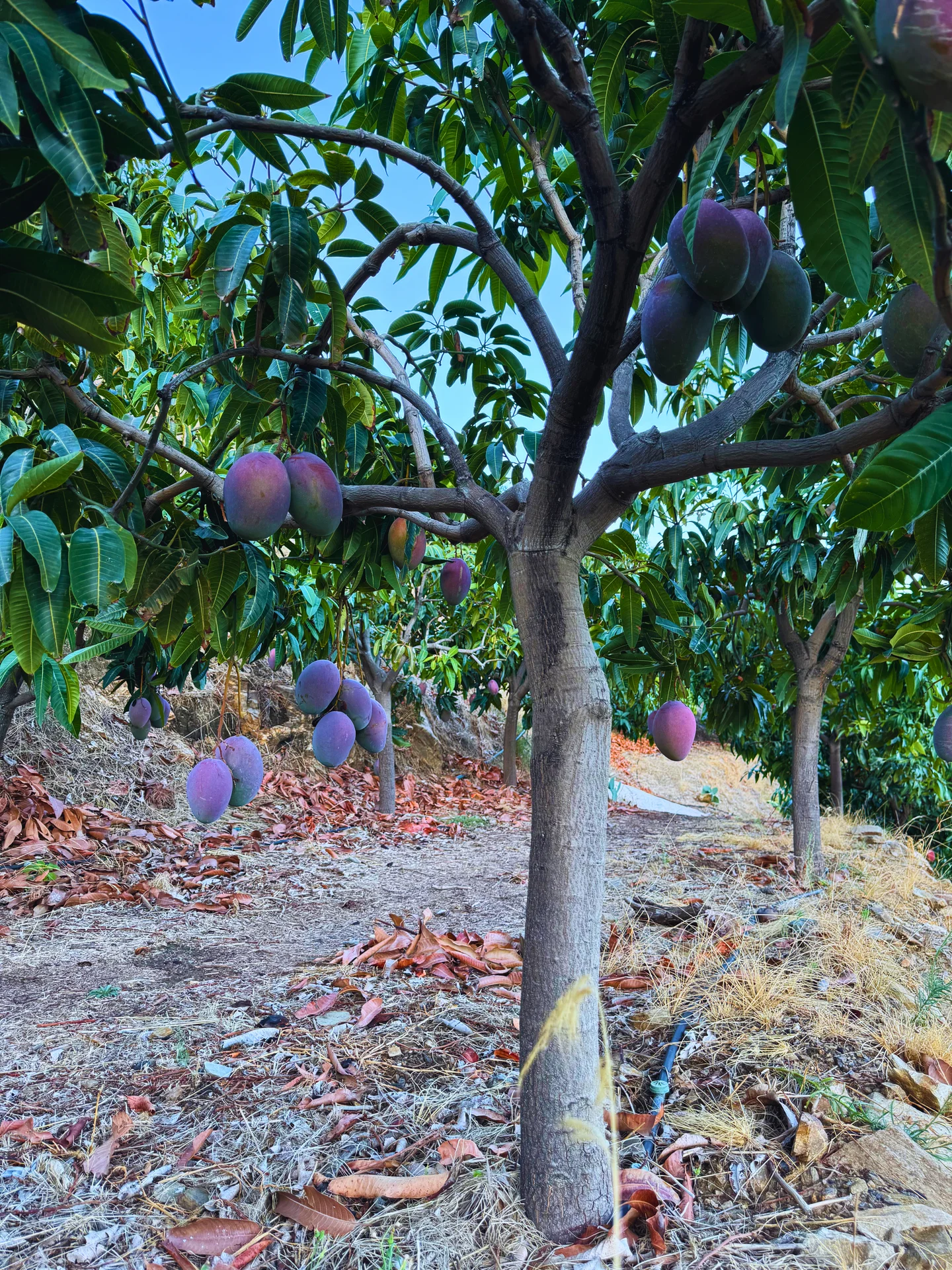
Osteen mango tree loaded with purple-coloured fruit at El Lucero farm

Buy Osteen mango online: the king of Spanish mangoes

The variety

What is the Osteen mango and why is it the best-seller?

Unique subtropical microclimate

320+ days of sunshine a year, sheltered by the Sierra Nevada mountains to the north and tempered by the Mediterranean to the south. The only territory in Europe where mango grows outdoors without artificial cover.

A variety with history since 1935

The Osteen family planted the first seed in Florida. It reached Spain in the 70s and today it stands as an international byword for well-grown premium mango.

300-600g per piece

Thick purple-red skin that protects the fruit during shipping. Deep orange flesh, creamy, firm and with deep sweetness without any perceptible fibre.

Flavour and texture

What does a tree-ripened Osteen mango really taste like?

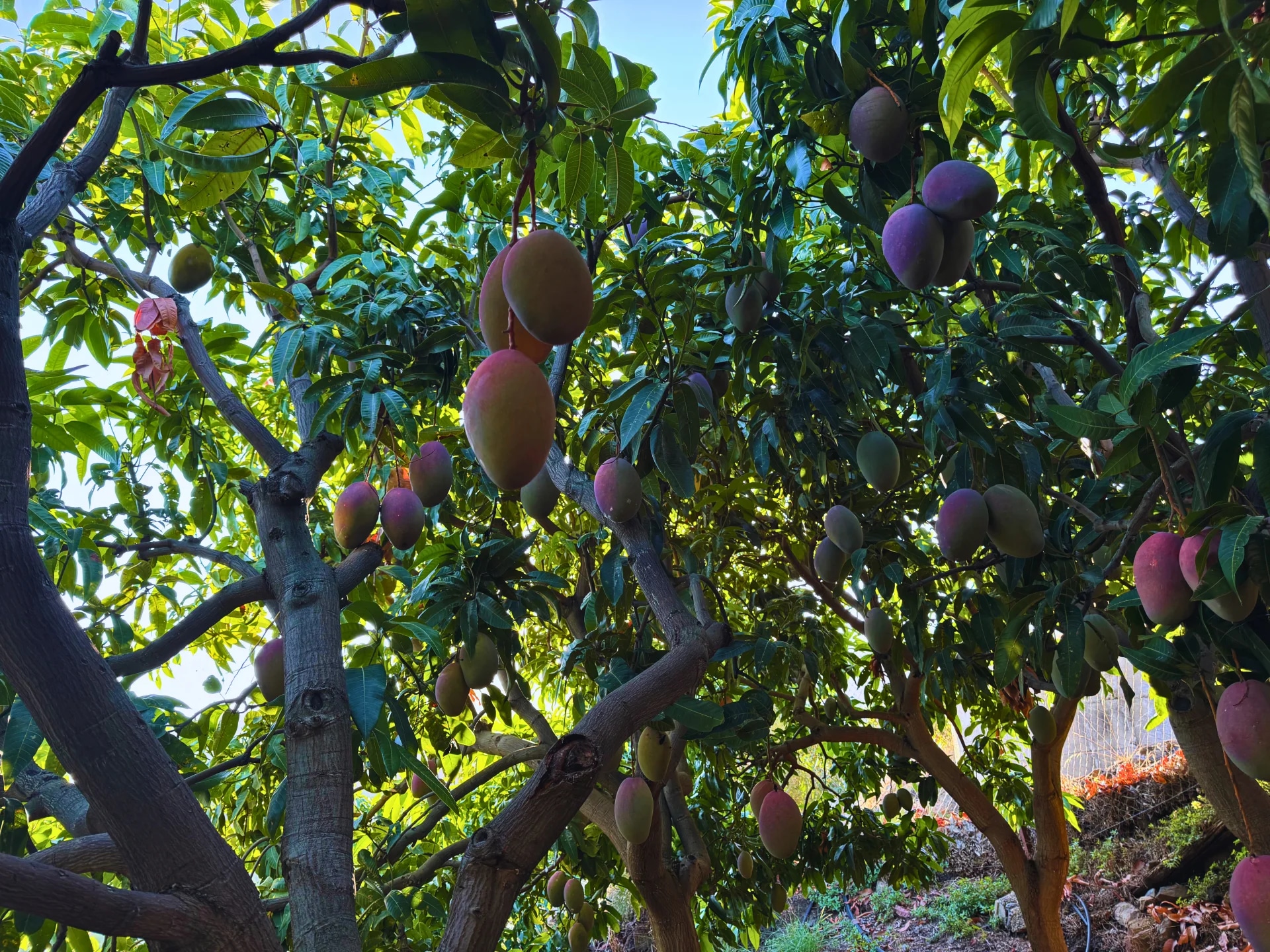
Backlit Osteen mango between tree branches at El Lucero farm

The difference against supermarket mango is stark and explained by the time from branch to plate. Imported mango is picked green to survive three to five weeks in shipping; it softens in ethylene chambers, but never develops the complex sugars or the volatile aromas that define a real Osteen.

Ours is harvested when the fruit has completed its ripening on the branch, with natural sugars at peak level. Each bite is creamy, sweet but balanced, with floral notes and a tropical aroma you'll notice the moment you open the box. No added sugar needed: just a spoon and a moment to enjoy it.

Taste the difference
Osteen tasting card

Flavour

Balanced sweetness with a light citrus touch. Intense and long.

Texture

Creamy, firm and free of perceptible fibre.

Colour

Purple-red skin. Deep orange flesh.

Aroma

Enveloping, tropical with floral notes. Noticeable on opening the box.

Ideal for

Eating diced raw, puddings, sweet salads, carpaccios.

Our commitment

What sets El Lucero's Osteen apart?

Harvested to order

Your mango is picked from the tree after you place the order, not before. There's no stock sitting in a chamber waiting for a customer.

Natural ripening on the branch

No ethylene, no cold chambers, no artificial forcing. The fruit completes its cycle on the tree as nature intends.

Direct from the grower

The same family grows, harvests, packs and ships. Over forty years with our hands in this same soil.

Costa Tropical, Almuñécar, Granada

The only subtropical microclimate in Europe. 320+ days of sunshine, sheltered by the Sierra Nevada, tempered by the Mediterranean.

Truly limited season

Only from August to October. Once the crop is exhausted, we close the shop until the following year. No tricks, no imports.

Transparent pricing, shipping included

Premium quality at producer direct pricing. All boxes include delivery to mainland Spain at no extra cost.

Osteen Mango boxes

Which Osteen box should you buy?

Trial

Osteen Box 2 kg

4-6

€17.95

9.98 €/kg

Perfect for first-timers or one to two people for a week.

Buy
Best seller

Osteen Box 4 kg

8-12

€27.95

7.49 €/kg

The families' favourite: lasts two weeks, better price per kg than the 2 kg box.

Buy
Shipping included to mainland SpainOrder via WhatsAppDirect personal support
Practical guide

How to ripen and store your Osteen mango at home?

Ripening at home

  1. 1Leave them at room temperature for 3-5 days
  2. 2To speed up: wrap in newspaper with an apple nearby
  3. 3Ready when the skin gives to gentle pressure and smells sweet from the ends

NEVER refrigerate the mango before it ripens. Cold blocks the process and the fruit will never reach its optimum.

Storage

Fridge once ripe: keeps 4-6 more days without flavour loss

Frozen diced pulp: keeps up to 6 months in good condition

Take the mango out of the fridge 15 minutes before eating to recover aroma and creaminess.

Ways to enjoy it

  • Diced raw with a spoon (the classic)
  • Smoothie with banana and coconut milk
  • Salad with avocado, rocket and prawns
  • Sweet-savoury sauce for white fish or chicken
  • Unsweetened pudding with Greek yoghurt
See full recipes
Health

What does an Osteen mango offer nutritionally?

Per 100g of flesh

Energy60 kcal
Carbohydrates15 g
Natural sugars13.7 g
Protein0.8 g
Vitamin C36.4 mg45%
Vitamin A54 µg7%
Vitamin B60.12 mg9%
Potassium168 mg8%

Stronger immune system

Combined vitamin C and A reinforce defences. A 100 g portion provides nearly half of the daily recommended vitamin C intake.

Natural polyphenol antioxidant

Rich in mangiferin and other polyphenols that fight the oxidative stress linked to cellular ageing.

Optimised brain function

Vitamin B6 plays a role in neurotransmitter production and cognitive performance across the day.

Cardiovascular health

Potassium and soluble fibre support healthy blood pressure and modulate LDL cholesterol.

Choose your variety

Osteen or Keitt mango, which suits me best?

Osteen
Keitt
Season
Aug — Oct
Oct — Nov
Flavour
Balanced sweet
Sweet with acid hint
Texture
Creamy, firm, fibre-free
Very juicy, soft
Skin
Purple-red
Green even when ripe
Average weight
300-600 g
400-800 g
Ideal for
Raw, puddings, salads
Juicing, smoothies, cooking
Frequently asked questions

What should you know about Osteen mango before buying?

The Osteen is a variety of US origin created in 1935 by the Osteen family in Fort Pierce, Florida. It reached Spain in the 70s when Granada growers realised the Costa Tropical microclimate (between Almuñécar, Motril and Salobreña) offered the subtropical conditions needed for outdoor cultivation without greenhouses, something unique in continental Europe.

Today the Osteen represents roughly 80% of Spanish mango production and has become an international shorthand for premium quality when well-grown and well-ripened. The typical piece weighs between 300 and 600 grams, has a thick purple-red skin that protects the fruit in shipping, and deep orange flesh that's firm and creamy.

What makes the Almuñécar, Granada Osteen stand apart from the Brazilian or Peruvian Osteen isn't genetics (the variety is identical) but the time between branch and plate. Ours is picked ripe and arrives in 24-48 hours across mainland Spain; imported fruit travels three to five weeks in ethylene chambers, losing the complex sugars and floral aromas that define the variety.

The Osteen stands out for a balanced sweet profile with a light citrus undertone that makes it approachable even for palates not used to exotic tropical fruit. It doesn't have the pronounced acidity of other tropical varieties like Keitt, nor the cloying sweetness of more commercial varieties like Tommy Atkins. It's the sweet middle ground that convinces even sceptics at first bite.

On the palate you'll notice floral notes on the finish and an enveloping tropical aroma that you smell before even cutting the first piece. The texture is both creamy and firm, with no fibre perceptible on the tongue, letting you eat it with a spoon like a natural ice cream or dice it cleanly for salads and puddings.

This profile only fully develops when the fruit ripens on the tree. An Osteen picked green (which is what imported mango does) never reaches this level: the texture softens with ethylene but the sugars and the volatile aromas simply don't arrive. That's why people who try a real Osteen after years of supermarket mango describe it as a completely different fruit, despite being the same variety on paper.

The Osteen season on the Costa Tropical, Almuñécar, Granada is natural and depends on the tree's physiological cycle in a subtropical microclimate without artificial forcing. Flowering happens in spring (March-April), fruit sets in April-May, grows through summer and reaches commercial maturity between late August and October. Outside that window there is simply no ripe Osteen on the tree.

In other producing countries (Brazil, Peru, Mexico) the Osteen season is different because of their geographical location in the opposite hemisphere or in purely tropical latitudes. This allows imported Osteen to be available in supermarkets almost year-round, but with the consequences we've seen: green harvesting, ethylene chambers, weeks of transport and loss of real flavour.

Respecting the natural season is part of our philosophy. When the harvest ends in October we close Osteen sales until the following year. For those who want to extend the season, between October and November our second variety, Keitt, is available. From June we open pre-orders for the following campaign so customers can secure their boxes before the crop runs out.

What distinguishes the Spanish Osteen from the imported one is not botany but the chain between branch and final consumer's plate, which directly affects gastronomic flavour, aroma and texture.

An Osteen grown in Brazil, Peru or Ivory Coast is picked green (at 70-75% of its ripeness) to withstand three to five weeks of sea or air transport and cold storage. During that journey it passes through controlled ethylene chambers that accelerate the softening of the flesh but do not develop the complex sugars or volatile aromatic compounds that define a ripe Osteen.

Our Almuñécar, Granada Osteen is picked at 95-100% of its ripeness, right when it completes the cycle on the branch. It's packed the same day and arrives in your kitchen in 24-48 hours. All the flavour and aroma development has happened where it should, namely on the tree. That's why the experience in the mouth is not comparable, even though both fruits are Osteen on the varietal sheet.

Three combined signals tell you your Osteen is at optimum eating point. The first is tactile: the skin yields slightly to gentle finger pressure near the stem, like a ripe avocado. If the piece feels stone-hard, it needs a few days; if it sinks deeply, it's past prime.

The second signal is aromatic: when you bring the base of the fruit (opposite end from the stem) to your nose, you should pick up a clear sweet tropical aroma. If there's no smell or it smells grassy, the fruit hasn't finished ripening. If the aroma is too intense and alcoholic, it has fermented and is past its prime.

The third signal is visual, though less reliable in Osteen because of its purple skin. Look for a yellow-orange tint starting to show through the thinner areas of the skin and a slight surface wrinkling near the stem. The general skin colour doesn't change dramatically during Osteen ripening, unlike other varieties that yellow entirely.

Because of its balanced sweetness and firm flesh with no fibre, the Osteen shines especially in preparations that show off the whole fruit and let you taste the quality of the flesh. Our first recommendation is to eat it raw diced with a spoon: cut lengthways on either side of the central stone, checkerboard the flesh without cutting the skin, invert the skin and eat directly with a spoon.

In puddings it works brilliantly in carpaccios (very thin slices with a drizzle of honey and lime), in homemade sorbets freezing the flesh with a bit of lime juice, and in cold cheesecakes where the Osteen adds natural sweetness and a creamy texture that complements the cheese. It also works as the base of a coulis to accompany Greek yoghurt, ice cream or chocolate puddings.

In savoury preparations, Osteen pairs with avocado and prawns in sweet salads, with rocket and blue cheese in gourmet salads, and in sweet-savoury sauces for oily fish (salmon, tuna) or white meat (chicken, pork). Avoid subjecting it to prolonged cooking: it loses aroma and turns cloying. Keitt is a better choice for cooking that requires intense heat.

Osteen mango stands out nutritionally for its high vitamin C content (36 mg per 100 g, around 45% of the RDA in a 100 g portion), vitamin A as beta-carotene, vitamin B6 and potassium. This combination supports the immune system, cardiovascular health and general cognitive function.

It's especially rich in mangiferin, a polyphenol specific to mango with proven antioxidant properties that help combat the oxidative stress linked to cellular ageing. Several studies have examined its effects on tissue protection and modulation of chronic inflammatory processes, always in the context of a varied and balanced diet, not as an isolated supplement.

Despite its sweetness, Osteen has a medium-low glycaemic index (around 55) thanks to its fibre content and the presence of natural fructose. A 100 g portion provides around 60 kcal, moderate amounts of sugars (13.7 g) and 1.6 g of fibre. It is suitable for most diets as long as it is consumed in moderation, like any fruit with a high natural sugar content.

Yes, Osteen mango freezes perfectly and keeps for up to six months with no significant loss of flavour or nutritional properties. It's a good way to use very ripe pieces you won't eat in the short term or to have mango available out of season for smoothies and specific preparations.

The optimal protocol is to freeze the flesh already cut into 2-3 cm dice on a flat tray (so they don't stick together) and then place the individual dice into airtight freezer bags with the air extracted. Label with the freezing date. Avoid freezing whole mango with skin because the subsequent defrosting is uneven and the texture suffers more.

Frozen Osteen pulp works excellently in smoothies, homemade sorbets, banana and mango shakes, and in cooked sauces where final texture is not critical. We don't recommend it for direct fresh consumption after defrosting: it loses firmness and creaminess although it keeps sweetness. For those uses, freshly harvested in-season mango is irreplaceable.

For a healthy adult without specific conditions, a standard portion of mango is 100-150 grams of flesh per day, equivalent to approximately half a medium Osteen mango (from those in the 4 kg box). This amount provides around 60-90 kcal, a significant contribution of vitamin C and fibre, and a moderate amount of natural sugars perfectly compatible with a balanced diet.

Within general public health recommendations, five portions of fruit and vegetables of varied types are suggested per day, not all from the same piece. Osteen mango can occupy one of those daily portions during the season months, alternating it with other seasonal fruits such as grapes, figs, pomegranates or autumn apples according to availability.

Children from six months can consume crushed Osteen mango in small amounts as an introduction to tropical fruits; older children tolerate half a mango or a whole mango per day depending on age and appetite. Older people without specific restrictions particularly benefit from its vitamin C, potassium and soluble fibre contribution, factors relevant for cardiovascular and immune health at advanced ages.

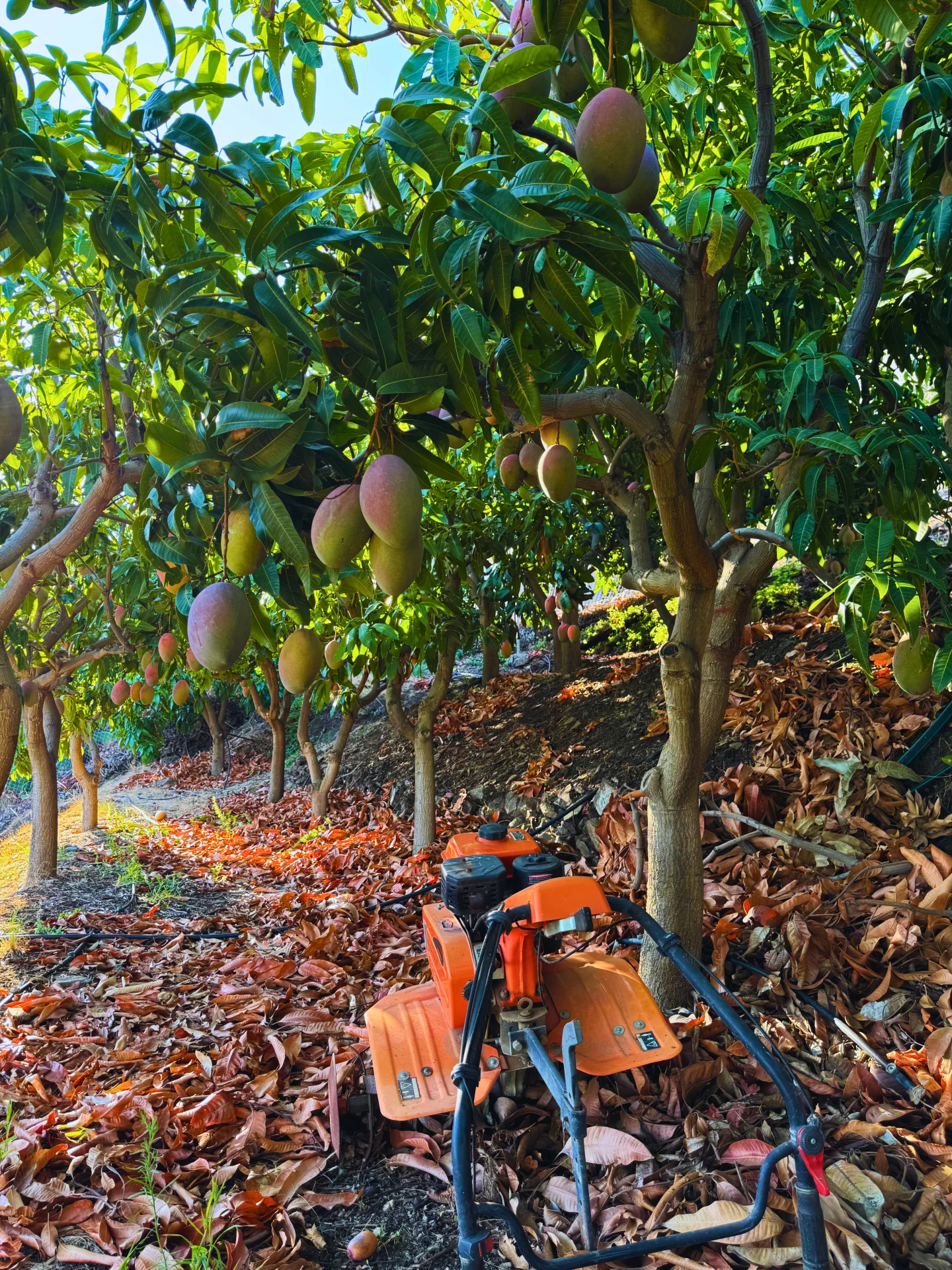
Mango trees with an abundance of fruit during harvest season
Limited season: August — October

Try the real Almuñécar, Granada Osteen mango

When the crop runs out, you'll wait until next August. Boxes from 19,95 € with shipping included and direct WhatsApp channel.

Harvested to orderDirect from the grower since 1980Direct WhatsApp support
Pay by Bizum or bank transfer, via WhatsAppDirect human attention with the farmFamily grower since 1980 on the Costa Tropical
Newsletter

Subscribe and be the first to know

We notify you when the tree-ripened mango season begins. No spam, just a few times a year.

By subscribing you accept our Privacy Policy. You can unsubscribe at any time.

We use cookies

We use our own and third-party cookies to improve your experience, analyze traffic and personalize content.