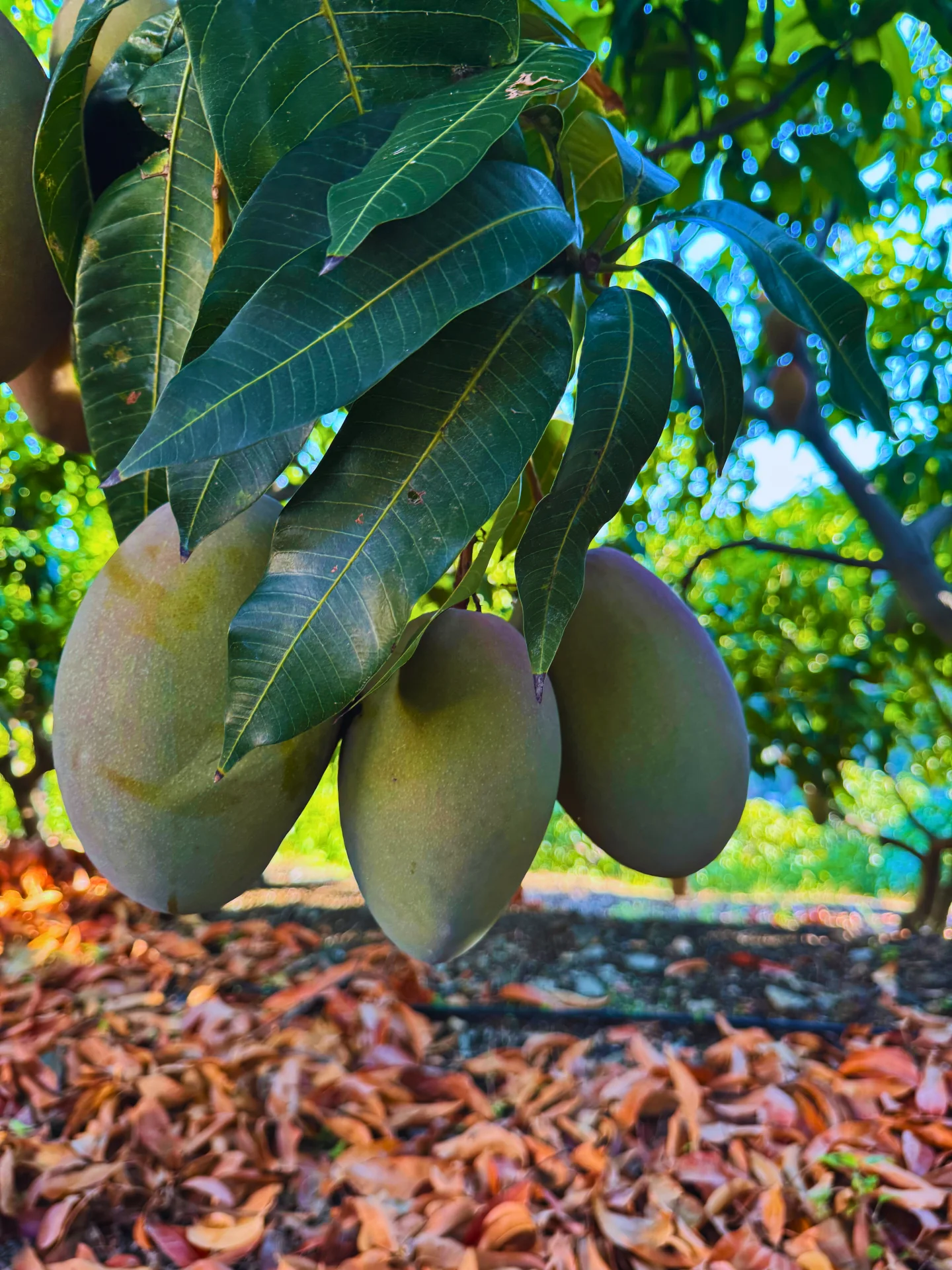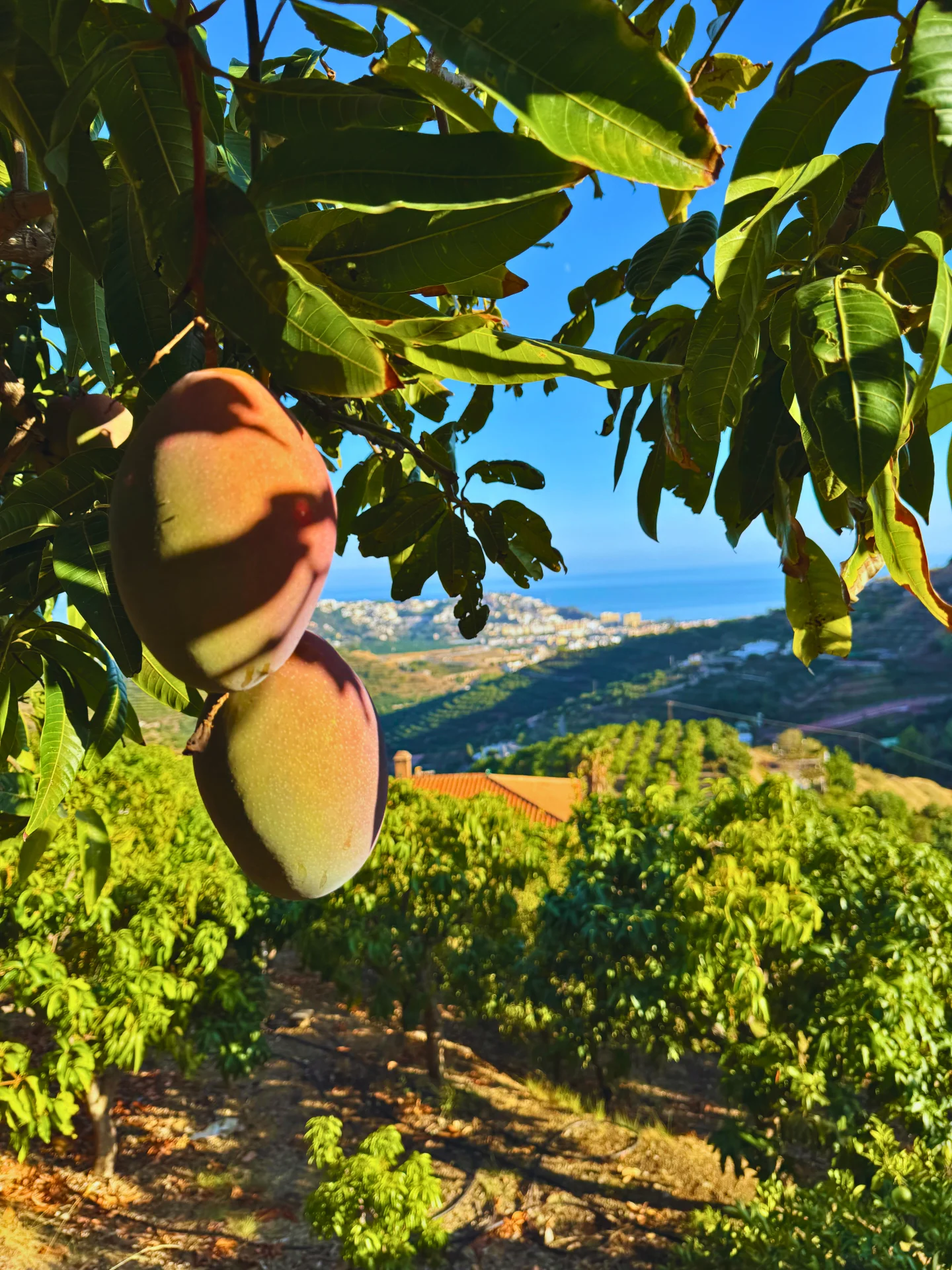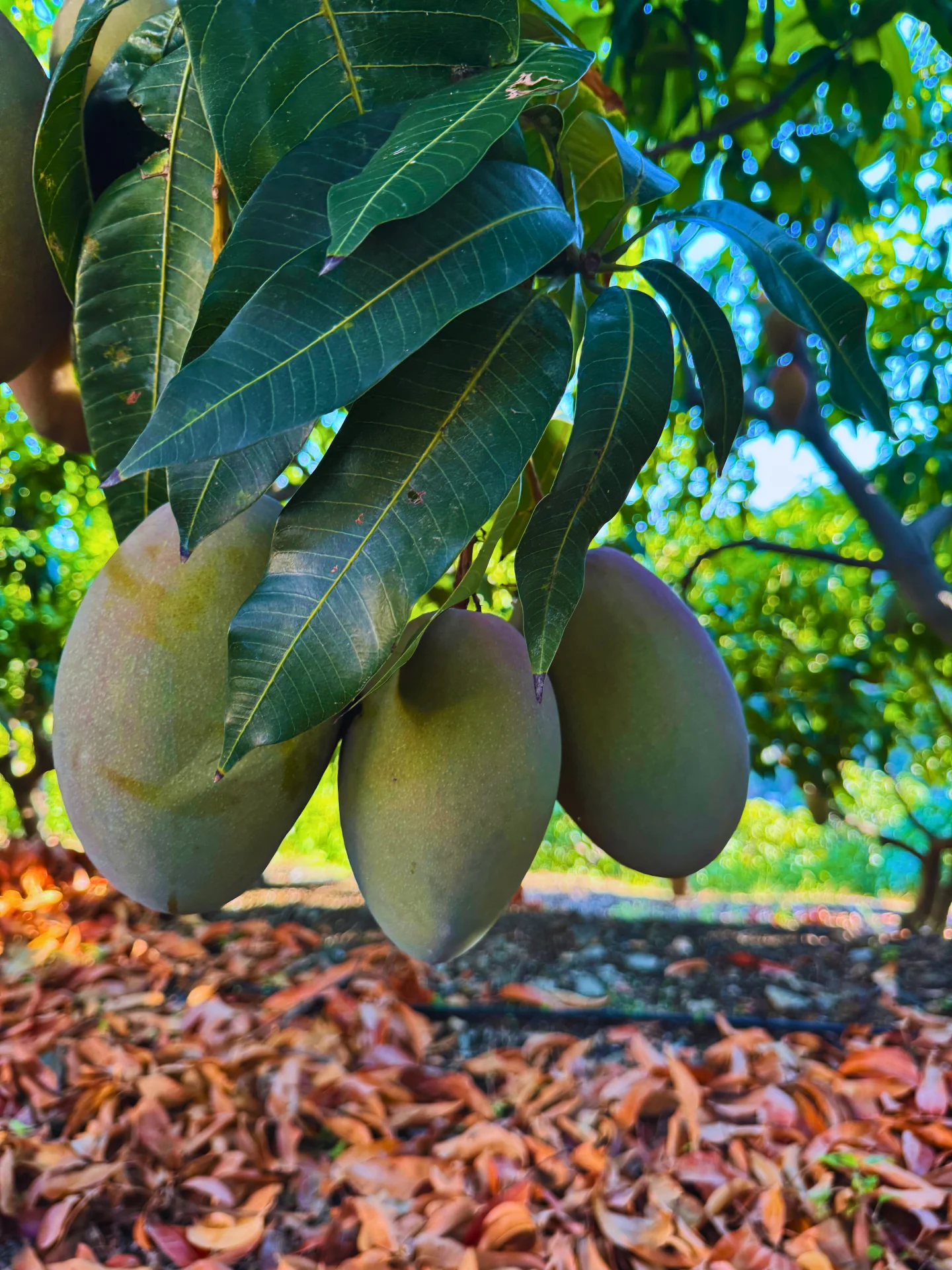
The Keitt mango is the absolute king of smoothies. Its juiciness and lack of fibre deliver a velvety texture you can't match with supermarket mango. Here's the base recipe we've been making at home for years, plus five variations so you have a different combo every weekday.
Why Keitt mango is ideal for smoothies
Of all commercial varieties, Keitt lends itself to smoothies for three reasons:
- Juiciness. You barely need to add liquid — the flesh is already half juice.
- Almost no fibre. None of the stringy feel you get from imported Tommy Atkins.
- High, balanced sweetness. You hardly need any honey or sugar.
If you only have Osteen on hand, it works great too — just a touch more acid, so adjust honey to taste.
Base recipe: mango and Greek yogurt smoothie
Ingredients (1 large glass, 400 ml)
- 1 ripe Keitt mango (or half if large): 300-350 g flesh
- 200 g plain unsweetened Greek yogurt
- 100 ml milk (or plant-based drink)
- 1 tsp honey (optional — mango is already sweet)
- Juice of ½ lime
- 4-6 ice cubes (or frozen mango)
Preparation in 2 minutes
- Peel and chop the mango.
- Put everything in the blender jar.
- Blend on high for 45 seconds until completely smooth.
- Taste: thicker, add more ice; thinner, more milk.
- Serve immediately in a tall glass.
Chef's trick: freeze half the mango the night before in chunks. Saves you the ice and keeps the smoothie concentrated and cold without watering down.
Variation 1: with oats (complete breakfast)
Add 3 tablespoons of rolled oats and let the mix sit in the blender jar for 5 minutes before blending, so the oats hydrate. You get a thicker, more filling smoothie, great before a morning workout.
Delivers: beta-glucan fibre, complex carbs, 3-4 hour satiety.
Variation 2: post-workout protein
Swap Greek yogurt for:
- 150 g skyr or 0% Greek yogurt
- 1 scoop of whey protein (vanilla or neutral, 25-30 g)
- Unsweetened almond milk instead of whole milk
Result: 30 g protein per glass, less fat. Perfect 30 minutes after training.
Variation 3: green tropical smoothie
Add to the base:
- A handful of baby spinach (100 g)
- ½ ripe avocado
- A small piece of fresh ginger
Mango completely covers the spinach flavour, but you gain iron, magnesium, good fats and a spectacular green colour.
Variation 4: with ginger and turmeric (anti-inflammatory)
To the base, add:
- 1 cm of peeled fresh ginger
- ¼ tsp of ground turmeric
- A pinch of black pepper (activates turmeric)
Natural anti-inflammatory power. Ideal for cold autumn mornings after training or when you're sore.
Variation 5: mango-coffee (the waker-upper)
Swap half the milk for a cold double espresso. Sounds odd, works amazingly: the coffee bitterness contrasts with mango's sweetness. Cold version of a tropical frappuccino.
Common mistakes that ruin a mango smoothie
- Unripe mango: tastes of starch if not ripe. Wait another day before blending.
- Too much liquid: ends up watery. Start with little milk, add if needed.
- Too much ice: dilutes flavour. Better to use frozen mango cubes.
- Weak blender: low power leaves mango in strings. A decent blender (> 600 W) makes a difference.
- Saving it for later: the smoothie loses aroma in 30 minutes. Blend and drink.
How to prep "smoothie cubes" for the whole week
When you have surplus mangoes (or a very ripe one to save), this trick is a lifesaver:
- Peel and chop the mangoes.
- Blend them alone, nothing else, to a puree.
- Pour into ice cube trays and freeze.
- Once frozen (6-8 hours), pop them out and store in a freezer bag.
- To make a smoothie: 6-8 cubes + yogurt + milk + blender. Done in 90 seconds.
Keep perfectly 6 months in the freezer. Best way to keep enjoying mango in January and February, off-season.
Nutritionally, what does a mango smoothie deliver?
The base recipe has:
- About 300 kcal
- 14 g protein (from Greek yogurt and milk)
- 6 g fat (mostly good fat from full-fat yogurt)
- 45 g carbs (half of it natural mango sugars)
- 4 g fibre
- A full day's vitamin C
Add oats or protein per variation and you've got a complete breakfast for the gym, office or beach.
If you like the idea of freezing mango for year-round smoothies, our 4 kg boxes are perfect — see them in the shop.
Sources and references
Nutritional and food safety information verified against:
- BEDCA — Spanish Food Composition Database — Mango nutritional values
- USDA FoodData Central — Mangos, raw — International macronutrients
- FoodSafety.gov — Food safety — Safe temperatures and times
- AESAN — Spanish Food Safety Agency — Handling recommendations