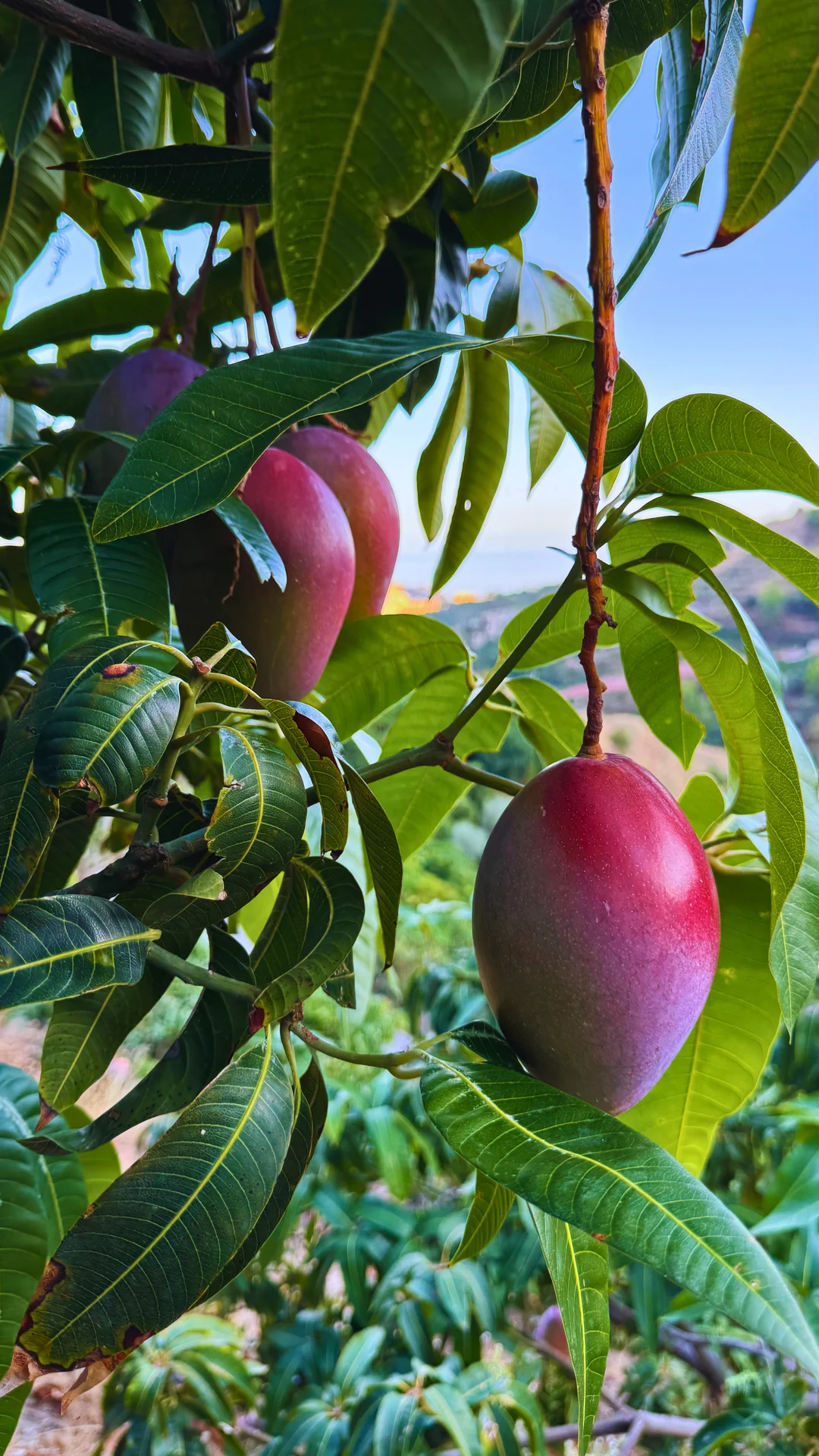
Mango has a bad rep among dieters because it "makes you gain weight". It's an urban legend: 100 g provide just 60 kcal — about the same as an apple. What's actually true is that every bite is loaded with nutrients useful for skin, vision, digestion and immune system. Here's what science says.
Mango nutrition facts (per 100 g flesh)
| Nutrient | Amount | % DV* |
|---|---|---|
| Energy | 60 kcal | 3 % |
| Carbohydrates | 15 g | 5 % |
| Natural sugars | 14 g | — |
| Fibre | 1.6 g | 6 % |
| Protein | 0.8 g | 2 % |
| Fats | 0.4 g | <1 % |
| Vitamin C | 36 mg | 45 % |
| Vitamin A (beta-carotene) | 54 μg | 7 % |
| Vitamin E | 0.9 mg | 7 % |
| Vitamin K | 4.2 μg | 6 % |
| Folate (B9) | 43 μg | 22 % |
| Potassium | 168 mg | 5 % |
| Magnesium | 10 mg | 3 % |
| Copper | 0.11 mg | 11 % |
*Daily Value for an average adult. Estimated data for ripe Costa Tropical mango.
1. Vitamin C for immune system and skin
A medium 300 g mango contains over 100 mg of vitamin C, well above the daily recommendation (80 mg). One piece covers your day with room to spare.
This vitamin is key for:
- Immune system: white blood cell and antibody production.
- Collagen synthesis: vitamin C is a mandatory cofactor. Without it, skin loses firmness and wounds heal poorly.
- Iron absorption: it multiplies the absorption of plant-based iron. Lentils with mango for dessert has science behind it.
2. Beta-carotenes and vitamin A for vision
The orange-yellow colour of the flesh comes from carotenoids, mainly beta-carotene, which the body converts into vitamin A. This vitamin is essential for:
- Night vision and adaptation to darkness.
- Dry-eye prevention.
- Integrity of skin and mucous membranes (barriers against infection).
Carotenoids also act as antioxidants, neutralizing free radicals that speed up cellular aging.
3. Polyphenols and mangiferin: star antioxidants
Mango contains its own polyphenol called mangiferin, studied since the nineties for antioxidant and anti-inflammatory activity. It's more concentrated in skin and stone than flesh, but the flesh still has useful amounts.
Alongside mangiferin we find quercetin, gallic acid and catechins — the same family of protective compounds abundant in green tea.
4. Fibre for digestion
With 1.6 g of fibre per 100 g, mango delivers both soluble and insoluble fibre in useful proportions. Soluble fibre helps control cholesterol and moderates glucose spikes; insoluble fibre improves intestinal transit.
Mango also contains natural digestive enzymes (amylase) that help break down carbohydrates. That's why it sits so well as a dessert for many people.
5. Potassium for muscles and blood pressure
A medium piece (~300 g) provides about 500 mg of potassium — more than a banana. This mineral regulates water balance, counteracts excess dietary sodium and helps maintain healthy blood pressure. If you train or sweat a lot in summer, mango is a great natural replenisher.
6. Folate for pregnancy and growth stages
At 43 μg per 100 g, mango delivers 22% of the daily recommendation for folate (vitamin B9), crucial during pregnancy for the baby's neural development and prevention of neural tube defects.
7. Low sodium, zero cholesterol, zero saturated fat
Mango has no added sodium, no cholesterol (it's plant-based) and negligible fat. This makes it suitable for low-sodium and low-fat diets.
8. Moderate glycemic index
Mango has a GI of 51, considered moderate. Its sugars come with fibre, which cushions glucose spikes. People with type 2 diabetes can include it moderately (100-150 g portions) within a balanced diet.
9. Hydration
Mango is 83% water. Eating mango in summer contributes notably to daily hydration, especially in hot climates. In many tropical countries, the "mango snack" replaces water for children and outdoor workers.
10. Lesser-known bioactive compounds
Recent research identifies compounds like lupeol, ellagic acid and lutein, which have shown antitumor activity in preliminary in vitro and animal studies (not yet confirmed in humans). Not miracles, but they add up.
How much mango can I eat a day?
No "absolute maximum" for a healthy person: if you feel like it, eat. General recommendations suggest 5 fruits a day, and a large mango counts as 1.5-2 servings.
People with diabetes: up to 150 g a day, preferably away from main meals.
People with IBS: mango contains FODMAPs, may sit irregularly in acute cases; start with small portions.
Babies from 6 months: can be introduced as puree or BLW. Very low allergenicity.
Tree-ripened mango vs supermarket mango
Nutrition data depend on ripeness. A mango picked green and chamber-ripened has less sugar, fewer carotenoids and less vitamin C than one sun-ripened. Starch hasn't fully converted to sugar and antioxidants haven't fully developed.
One more reason — among the many we give across this blog — why an on-demand Costa Tropical mango is nutritionally superior to an imported one.
How to add mango to your diet without tiring of it
- Breakfast: half a mango with natural yogurt and chia seeds.
- Salad: cubes with spinach, feta and walnuts.
- Cold salsa: with avocado, cilantro, lime and chile (mango guacamole).
- Frozen in chunks: for winter smoothies when out of season.
- Desserts: dairy-free mousse (with Greek yogurt), lemon sorbet.
Check what variety we have available in our shop, or join the pre-order list outside of season.
Sources and references
This article is based on data from the following official and scientific sources:
- BEDCA — Spanish Food Composition Database — Mango nutritional composition
- USDA FoodData Central — Mangos, raw — International macronutrients
- EFSA — Dietary Reference Values — EU reference values for vitamins and fibre
- University of Sydney — Glycemic Index Database — Mango glycaemic index (51-56, medium)
- PubMed/NCBI — Research on mangiferin — Bioactive compounds
- Diabetes UK — Fruit and diabetes — Fruit consumption for people with diabetes
- WHO — Healthy diet — General recommendations on fruit and vitamins
Medical disclaimer: this article is informational and does not replace professional medical, nutritional or dietary advice. If you have diabetes, allergies, are pregnant or follow a special diet, consult your doctor or registered dietitian before changing your diet.